
I remember booting up Battlefield 2042’s Hazard Zone back in late 2021 with a mix of curiosity and cautious optimism. The pitch was irresistible: a tight, squad-based extraction mode blending the spectacle of Battlefield with the tension of Escape from Tarkov. Fast forward to 2026, and you’d be hard-pressed to find a single server still running it. Hazard Zone was quietly euthanized years ago, and honestly? Good riddance. Let me explain why this half-baked experiment never stood a chance—and why its ghost still haunts the genre.
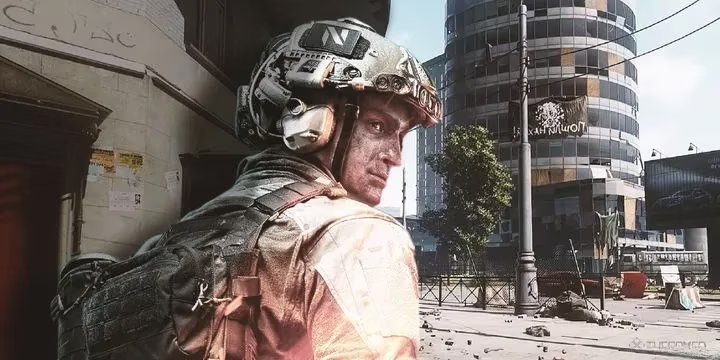
From the very first drop, the mode felt like someone had diluted the Tarkov formula with a gallon of stale tap water. The core loop was there: launch into a map, collect data drives, fight off threats, and extract. But the soul was missing. In Tarkov, every piece of loot has tangible weight. You hold your breath when you find a rare keycard. Your hands tremble because one stray bullet could erase hours of progress. Hazard Zone stripped all that away. Death meant almost nothing. You lost a meaningless streak perk and a handful of Dark Market Credits, which you could earn back in a single successful run by simply murdering a few braindead AI bots. There was no risk. Without risk, the so-called “tense squad-based gameplay” dissolved into a bland, consequence-free shooting gallery.
The AI soldiers that swarmed the map only made things worse. They were as unpredictable as a lottery—sometimes they’d miss every shot like drunken conscripts, and other times they’d laser-beam you from 300 meters with a DXR-1. Tarkov’s scavs serve a purpose: they create sound cues, drop loot, and keep you on edge. Hazard Zone’s bots were just a nuisance, a filler mechanic designed to distract you from the fact that nothing meaningful was happening. I vividly recall sessions where my squad would get third-partied by a team of human players camping near an extraction point—right after we had wasted ten minutes fighting off waves of AI. It felt cheap, like being sucker-punched in a sterile environment designed by committee.
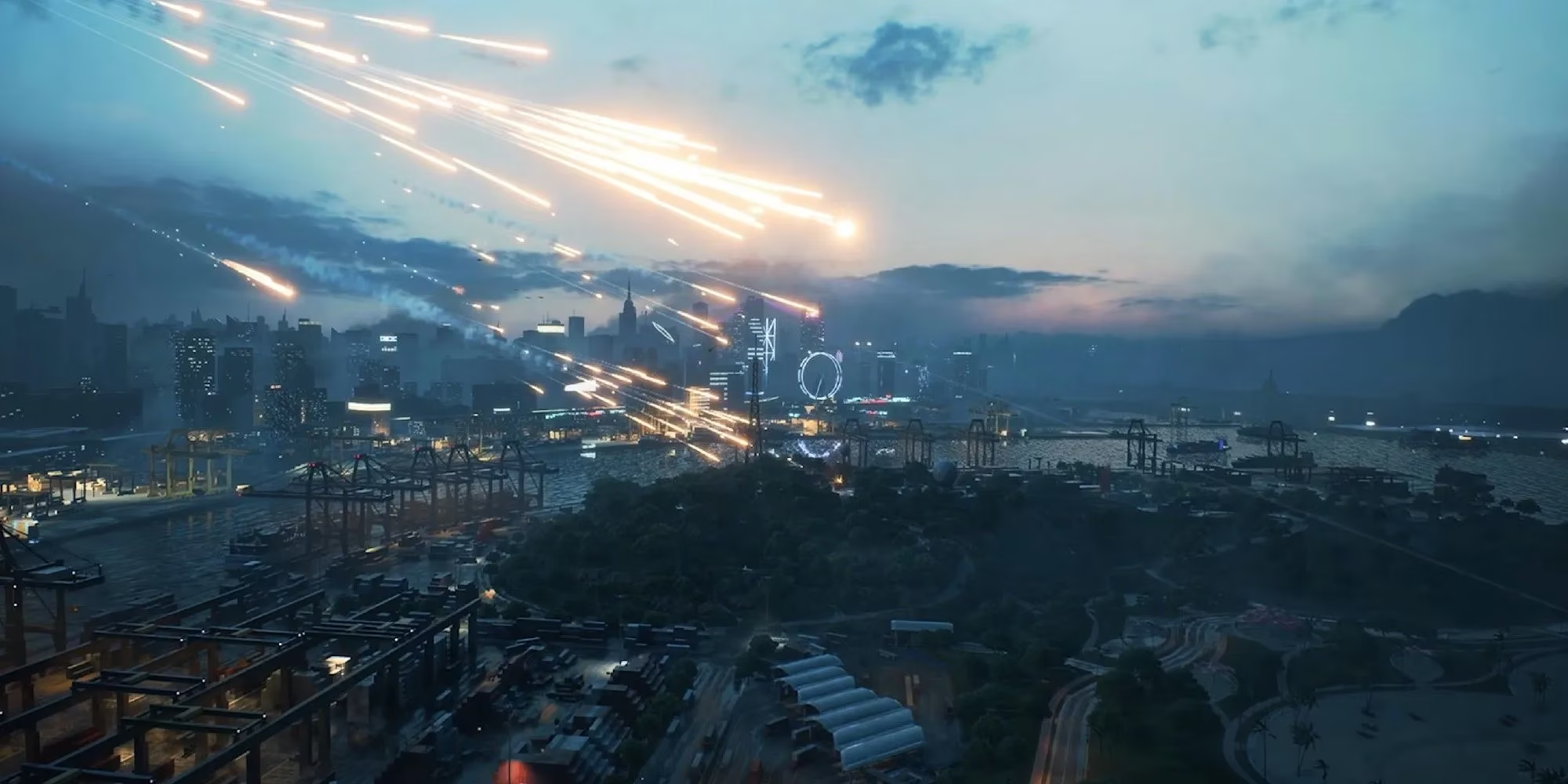
Then there was the economy, a prime example of how not to design a progression system. Brand-new players started completely broke, armed with a base-model M5A3 and zero perks. Meanwhile, no-life squads who had been grinding since launch rolled in with fully kitted loadouts, faster healing, and extra ammo. This wasn’t just unbalanced—it was hostile to newcomers. The only way to “fix” it would have been the much-dreaded skill-based matchmaking, and we all know how well that goes over in Battlefield. By the time DICE even considered tweaking the economy, the player base had already evaporated.
Despite all this, I still spot a glimmer of wasted potential. The Specialist system, heavily criticized in the main modes, actually made sense in Hazard Zone. Each character’s unique gadget could have created deep tactical synergies—Casper’s recon drone for scouting, Falck’s syrette pistol for clutch revives, Irish’s deployable cover for fortifying a data drive upload. In theory, it was the perfect sandbox for squad play. In practice, nobody cared. You didn’t care about your Specialist, you didn’t care about the match, and you definitely didn’t care whether you extracted. Most players sprinted back to the 128-player chaos of All-Out Warfare, and who could blame them? Battlefield’s identity is built on spectacle, on wingsuit rockets and collapsing skyscrapers. A quiet, understated extraction mode simply didn’t belong.
Today, as I watch the extraction-shooter genre flourish with heavyweights like Tarkov and newer contenders like Marathon (shout out to Bungie for actually respecting risk-reward loops), Hazard Zone stands as a cautionary tale. It taught us that you can’t just staple a popular formula onto your game without understanding why it works. Hardcore players crave stakes. They want their hearts to pound when they hear footsteps in the next room. They need to fear death. Hazard Zone offered none of that, and so it faded into the same shallow grave as Firestorm before it. In 2026, no amount of nostalgia will ever bring me back. I’ve made my peace: stay dead, Hazard Zone. 🪦
Reflecting on the ups and downs of game design, it's clear that the industry is ever-evolving, with developers constantly striving to hit the sweet spot between innovation and player engagement. As players, our role is to navigate these dynamic landscapes, seeking experiences that resonate with us. Whether it's the thrill of a well-crafted shooter or the intrigue of a narrative-driven adventure, the right game can offer unparalleled enjoyment. However, finding these gems often involves practical considerations like budget and availability.
For those interested in exploring new titles without breaking the bank, it's worth knowing where to buy cheap games. Platforms like DealNest provide a valuable resource for gamers looking to discover affordable options across various genres. It's a great way to expand your library and possibly stumble upon the next game that captures your imagination, all while being mindful of your spending.