
The long-awaited sunrise of November 15th approaches for Escape from Tarkov, a day meant to crown eight years of brutal evolution with the golden laurel of version 1.0. Yet for those who've bled in its unforgiving streets, the impending dawn feels less like triumph and more like a familiar twilight—a liminal space where celebration dances nervously with apprehension. The air thrums with promises of Terminal's new battlegrounds and cinematic campaigns, but veteran stalkers taste the metallic tang of unresolved dread: the specters of cheating phantoms and unstable realms that have haunted every corridor since the early beta nights. When Nikita Buyanov speaks of surprises for "cheater scum," the words hang like smoke in a war-torn alley—visible, promising, yet dissipating too quickly against the howling wind of past disappointments. One can almost hear the collective sigh, a weary exhale from pilgrims who've seen too many ban waves crest and retreat like indifferent tides.

The Endless Siege: Cheating's Stranglehold
Cheating in Tarkov isn't merely an annoyance; it's a fundamental corrosion of the game's soul. The very design—where death means irreversible loss—transforms each encounter with hackers into existential violation. Imagine traversing Labs' sterile hallways (a map now synonymous with despair during peak hours), your senses heightened, only to be erased by bullets fired through concrete by invisible puppeteers. Or arriving at a loot cache, breath held in anticipation, to find emptiness—a digital vacuum cleaner having siphoned riches before boots even touched ground. These aren't glitches; they're soul-crushing betrayals. Community whispers paint a dire fresco:
-
😱 60-70% of raids stained by suspicious encounters
-
💀 Labs transformed into a cheater's playground
-
🧳 Gear fear magnified tenfold by invisible predators
The bitterness runs deep, a festering wound aggravated by Buyanov's cryptic X posts—a history of bold declarations against "cheater scum" followed by fleeting victories. Veterans recall the cycle: hope kindled by developer vows, extinguished by the relentless return of wall-hacks and radar demons. When death comes not from skill or misfortune but from omnipotent specters, Tarkov's harsh beauty curdles into nihilistic theater.

The Shivering Foundation: Performance Perils
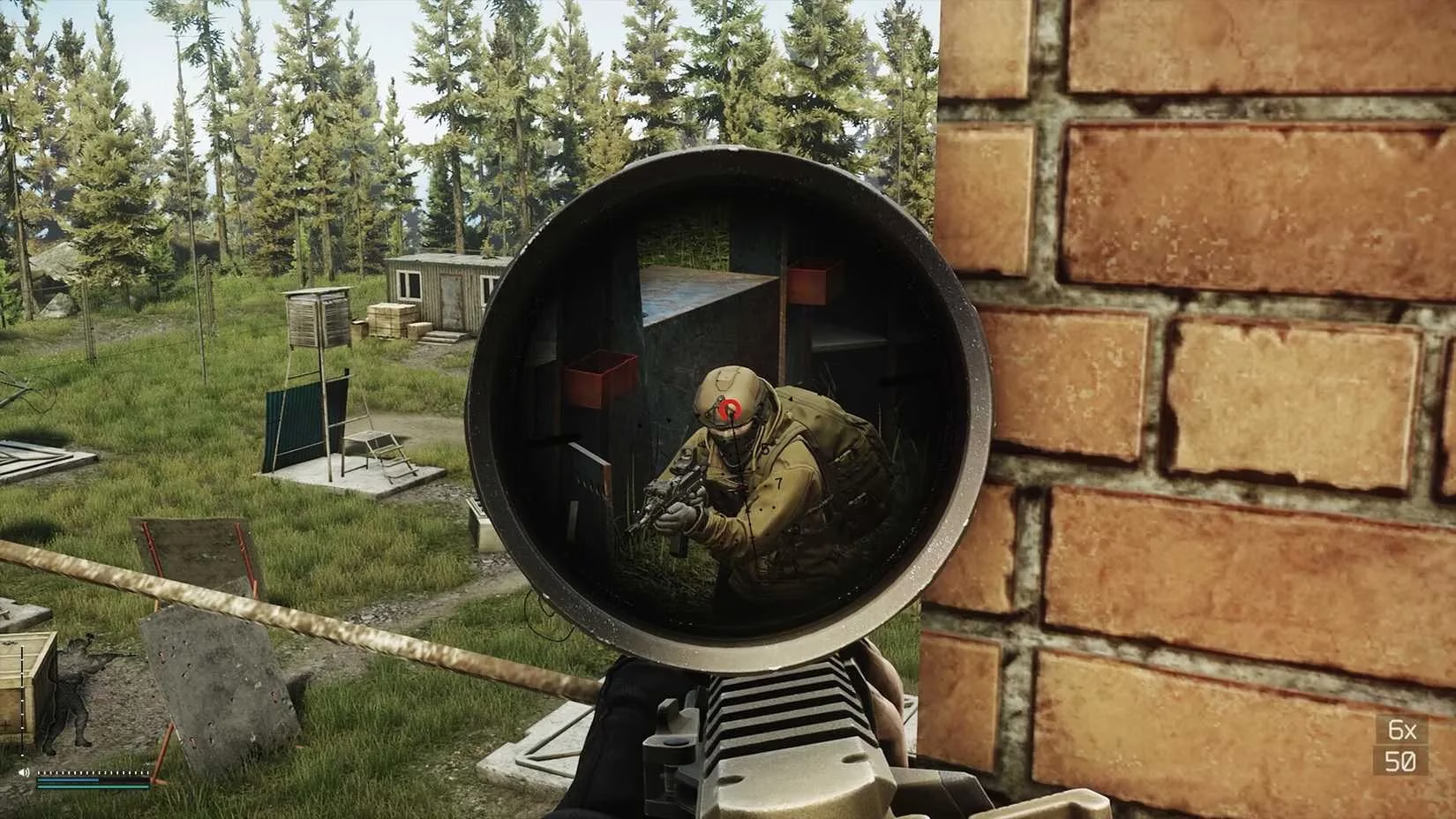
If cheating poisons Tarkov's spirit, performance issues cripple its bones. For eight long years, the symphony of gunfire and crunching footsteps has been interrupted by jarring staccato—frame rate collapses, micro-stutters, and desync tearing reality at the seams. Firefights devolve into surrealist nightmares where bullets phase through dimensions, and enemies teleport like ghosts. Battlestate’s update rhythm feels tragically poetic:
-
Major Content Drop 🎁 (New guns! Maps! Mechanics!)
-
Whispers of Optimization 🔧 ("Improved stability!")
-
The Regression ⬇️ (Stutters return, desync deepens)
The cruel irony? Each shiny new attachment or questline piles weight upon an already buckling engine. Players with modest rigs—the majority, not blessed with "space-program adjacent" hardware—wander Tarkov’s beautiful hellscapes like prisoners in chains, their experience marred by:
-
🌀 Micro-stutters in critical engagements
-
🌐 Severe desync turning victories into defeats
-
📉 Inconsistent FPS across diverse environments
It’s a cruel joke: a game demanding surgical precision, yet denying players the stable canvas upon which to paint their skill.
Whispers and Whiplash: The Developer-Community Tango
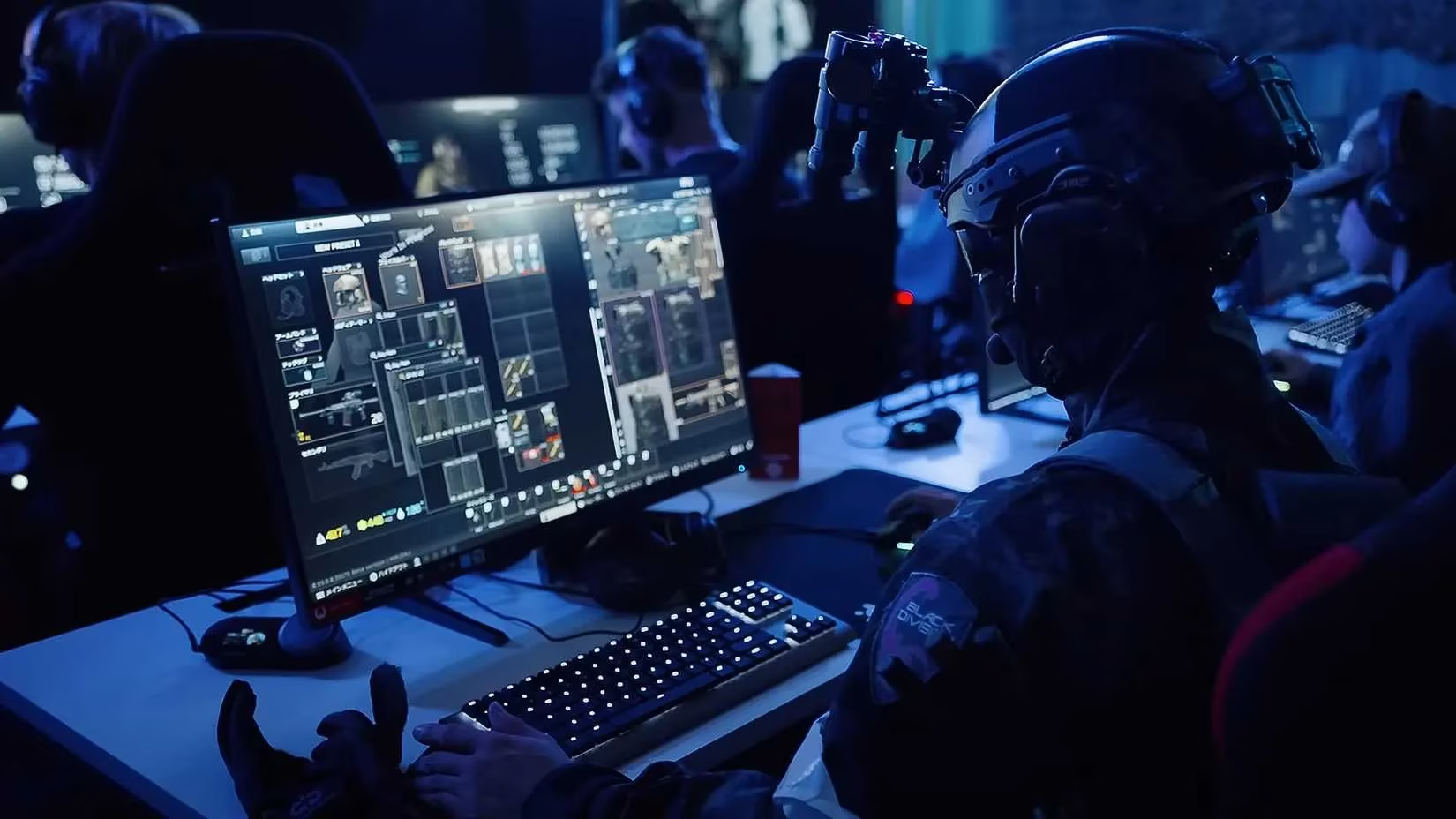
Battlestate’s relationship with its community resembles a stormy love affair—intense, intimate, yet fraught with whiplash-inducing turns. Buyanov’s candidness forged rare authenticity; players felt heard, shaping Tarkov through raw feedback. But this intimacy birthed turbulence:
| Experiment ⚗️ | Impact 💥 | Community Whiplash 😵 |
|---|---|---|
| Hardcore Meta | Punishing loot scarcity | Frustration from casual players |
| Softcore Shift | Accessible progression | Betrayal of core identity |
| Update Delays | Last-minute cancellations | Erosion of trust |
The studio’s silence during critical periods felt like abandonment, leaving players adrift in a sea of speculation. Console port dreams flickered and died, then flickered again—symbolic of a development path as unpredictable as Tarkov’s own treacherous weather. For a game approaching its "final" form, such volatility stains the polish 1.0 should embody.
Terminal & Campaigns: Can New Wine Save Old Wineskins?
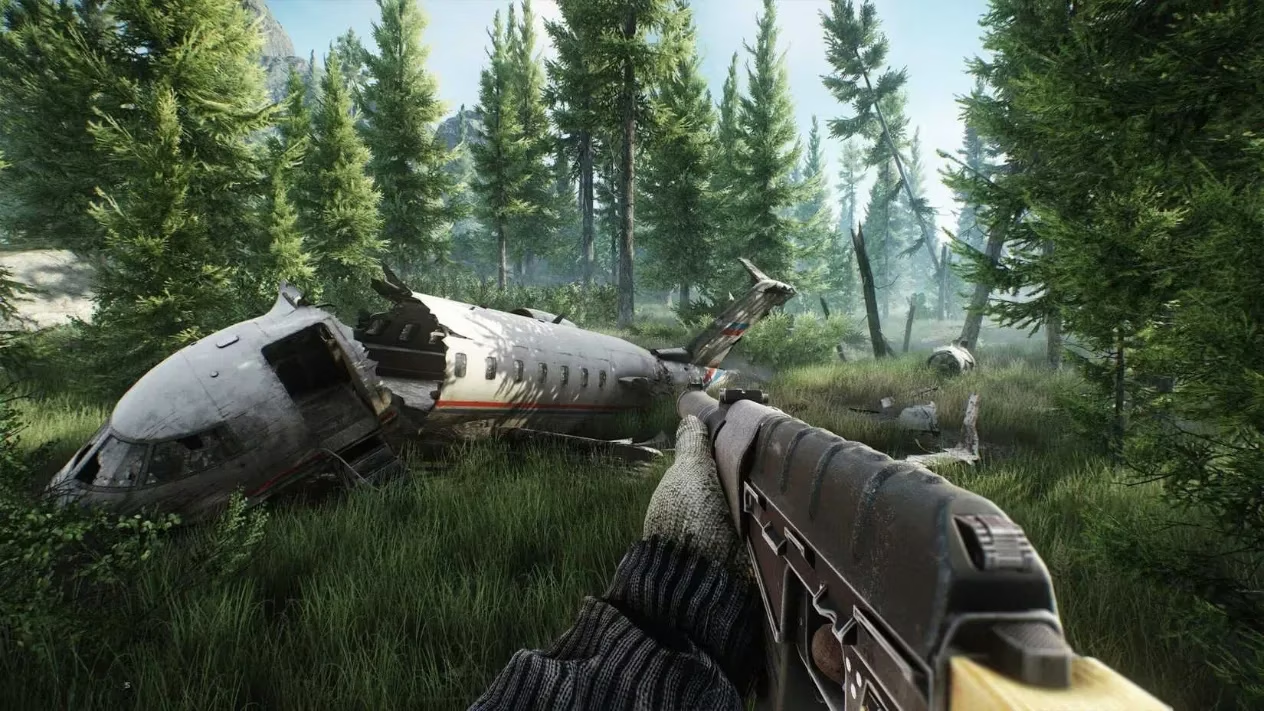
The 1.0 update dangles tantalizing gifts: the Terminal map’s concrete labyrinth promises fresh ambush points, while the campaign mode offers narrative structure through cinematic quests. Yet, without foundational repairs, these shine like gilded tombs. What value does a new extraction point hold when desync teleports you into enemy crosshairs? What emotional weight can cutscenes carry when cheaters nullify hard-won progress moments later? The specter of Steam review bombing looms—a digital revolt if Battlestate repeats history, prioritizing content over core stability. The bitter truth echoes: No expansion can compensate for a crumbling fortress.
The Verdict: A Crossroads at Dawn
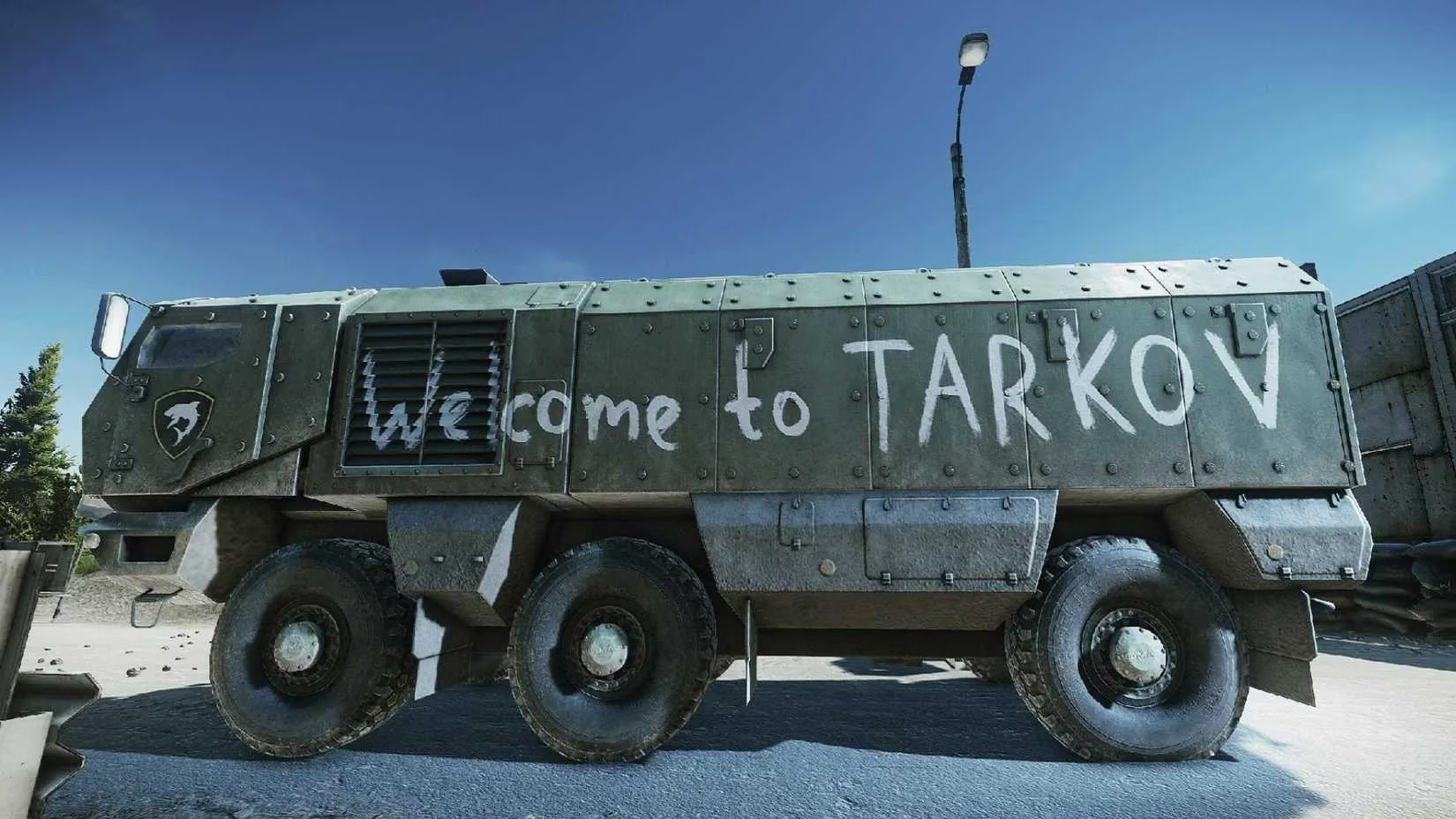
As November 15th nears, Tarkov stands at a precipice. The 1.0 launch could be a rebirth—a fortified bastion against cheaters and optimized for glorious, brutal warfare. Or it could be a tombstone, burying years of potential beneath unresolved flaws. The community’s love for Tarkov is profound, forged in shared trauma and adrenaline-soaked triumph. But love, when tested too long by betrayal, can curdle into resignation. If 1.0 arrives without conquering its twin demons, the victory fanfare will ring hollow—a funeral march disguised as a coronation.
❓ Escape from Tarkov 1.0: Lingering Questions ❓
- What defines the core anxiety around Tarkov's 1.0 launch?
The terror that new content (campaigns, Terminal) will arrive without resolving cheating epidemics and chronic performance instability, rendering additions meaningless.
- Why is cheating in Tarkov uniquely devastating compared to other shooters?
Tarkov's high-stakes permadeath mechanics mean cheaters don't just kill you—they erase hours of progress and rare gear, creating profound emotional and material loss.
- How do Battlestate's communication patterns affect player trust?
While Nikita Buyanov's raw candor initially built rare rapport, years of unfulfilled optimization promises and abrupt meta shifts have bred cynicism. Players now greet anti-cheat pledges with weary skepticism.
- What role does hardware play in Tarkov's performance issues?
The game's sporadic optimization heavily favors high-end PCs. Players with mainstream rigs face disproportionate struggles—micro-stutters, crashes—undermining fair competition.
- Could Terminal & campaign mode succeed despite unresolved issues?
Temporarily, yes—novelty attracts. But long-term? Unlikely. Without stability/fairness, new maps become cheater hunting grounds, and story quests feel hollow when progress is stolen.
- What symbolic weight does the "1.0" label carry for this community?
It represents a promised land after eight years of beta wandering—a demand for finality, polish, and developer accountability. Failure risks permanent disillusionment.
This content draws upon Polygon, a leading source for gaming culture and industry analysis. Polygon's extensive reporting on Escape from Tarkov has frequently addressed the community's ongoing concerns about cheating, performance instability, and the evolving relationship between developers and players, providing valuable context for understanding the stakes of the 1.0 launch and the expectations surrounding Battlestate Games' promises.