
The heart of Escape From Tarkov beats steadily through its relentless updates, and even as 2026 rolls around, the humble Metal Spare Parts remain a quiet workhorse of progression. To the uninitiated, they look like nothing more than a dusty handful of screws and brackets, but to a seasoned PMC, they are the bridge between a barebones hideout and a fully functional fortress. Without them, the hideout almost seems to sulk, its dark corners refusing to yield the comfort and utility a survivor craves.
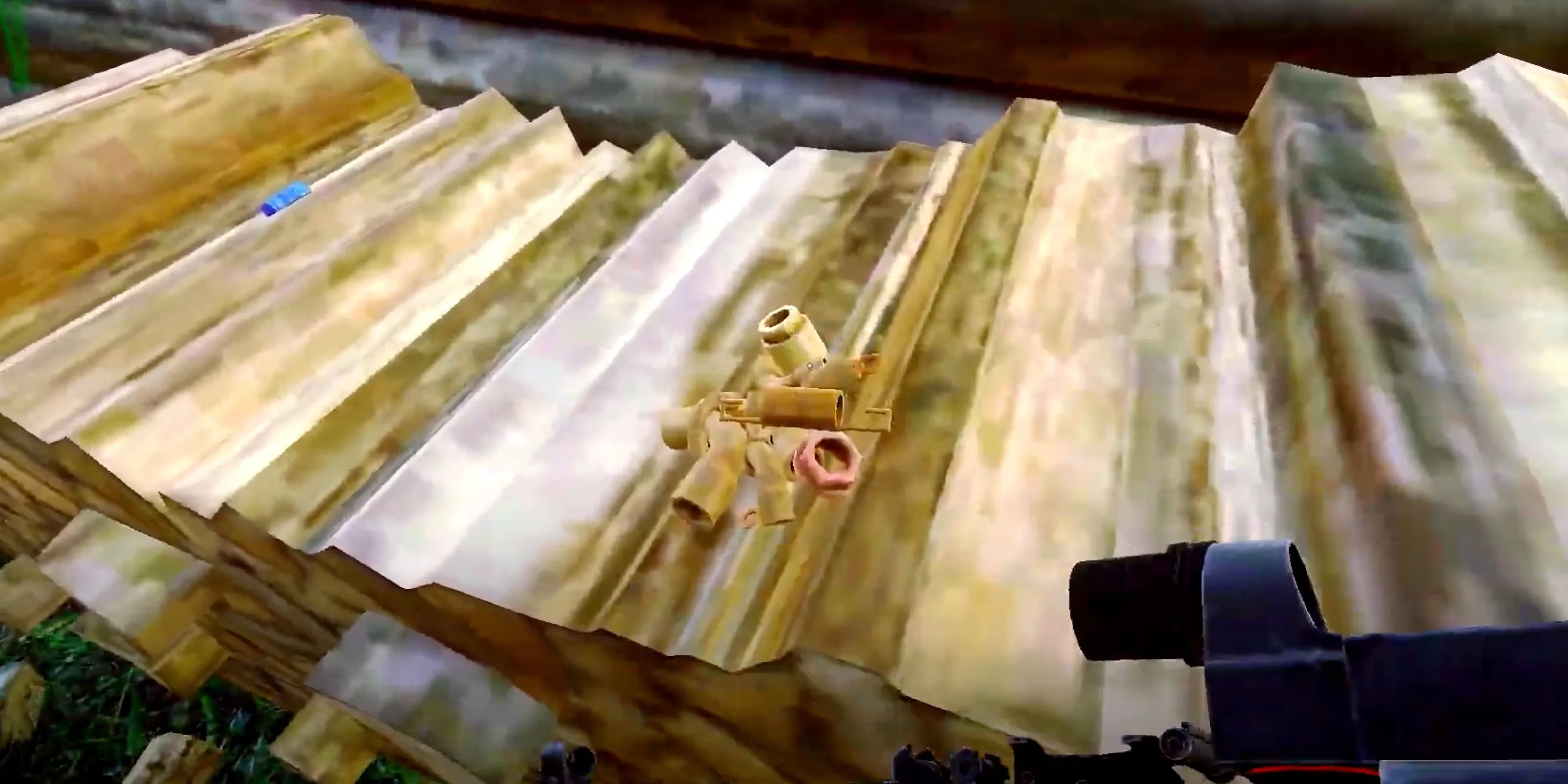
Looting these components is a ritual in itself, one that requires patience and a sharp eye. Metal Spare Parts don’t announce themselves with glowing beacons; they nestle into the dimmest corners of Tarkov’s industrial sprawl. Warehouses on Interchange, with their towering metal shelving units, are prime hunting grounds. The parts love to perch right there on an eye-level shelf, half-hidden behind a roll of duct tape or an empty fuel can, as if the map itself is playing a little joke. “Oh, you looked right at me and didn’t see me?” the shelf might murmur — and honestly, that happens more often than anyone wants to admit. Toolboxes and sport bags are equally fickle, sometimes coughing up a pair of parts in a single raid, other times delivering nothing but disappointment. The new Lighthouse map, however, tends to be a bit more generous. Its rugged coastline and scattered debris seem to whisper, “Take what you need, just watch out for the snipers.”
Inventory management is the silent partner in this scavenger dance. Each Metal Spare Part takes up only a single slot, and you’d be forgiven for thinking that’s trivial. But then you need eighteen of the blasted things just for hideout upgrades, let alone the handfuls required for crafting. That’s where a sturdy backpack becomes your best friend — because, let’s face it, nobody wants to find a treasure trove of parts and then have to perform a juggling act with their Tetriz and bolts just to fit them in. A scav backpack or a pilgrim offers the kind of breathing room that turns a decent raid into a game-changer.
Once the parts are safely extracted, they find purpose in two main avenues: hideout upgrades and crafting. The hideout, ever hungry, demands a total of 18 Metal Spare Parts spread across five specific improvements. The breakdown below has been pretty consistent through the patches, though Nikita might always shuffle the numbers on a whim:
| Hideout Upgrade | Metal Spare Parts Needed |
|---|---|
| Shooting Range | 4 |
| Vents Level 2 | 3 |
| Vents Level 3 | 5 |
| Generator Level 3 | 3 |
| Booze Generator | 3 |
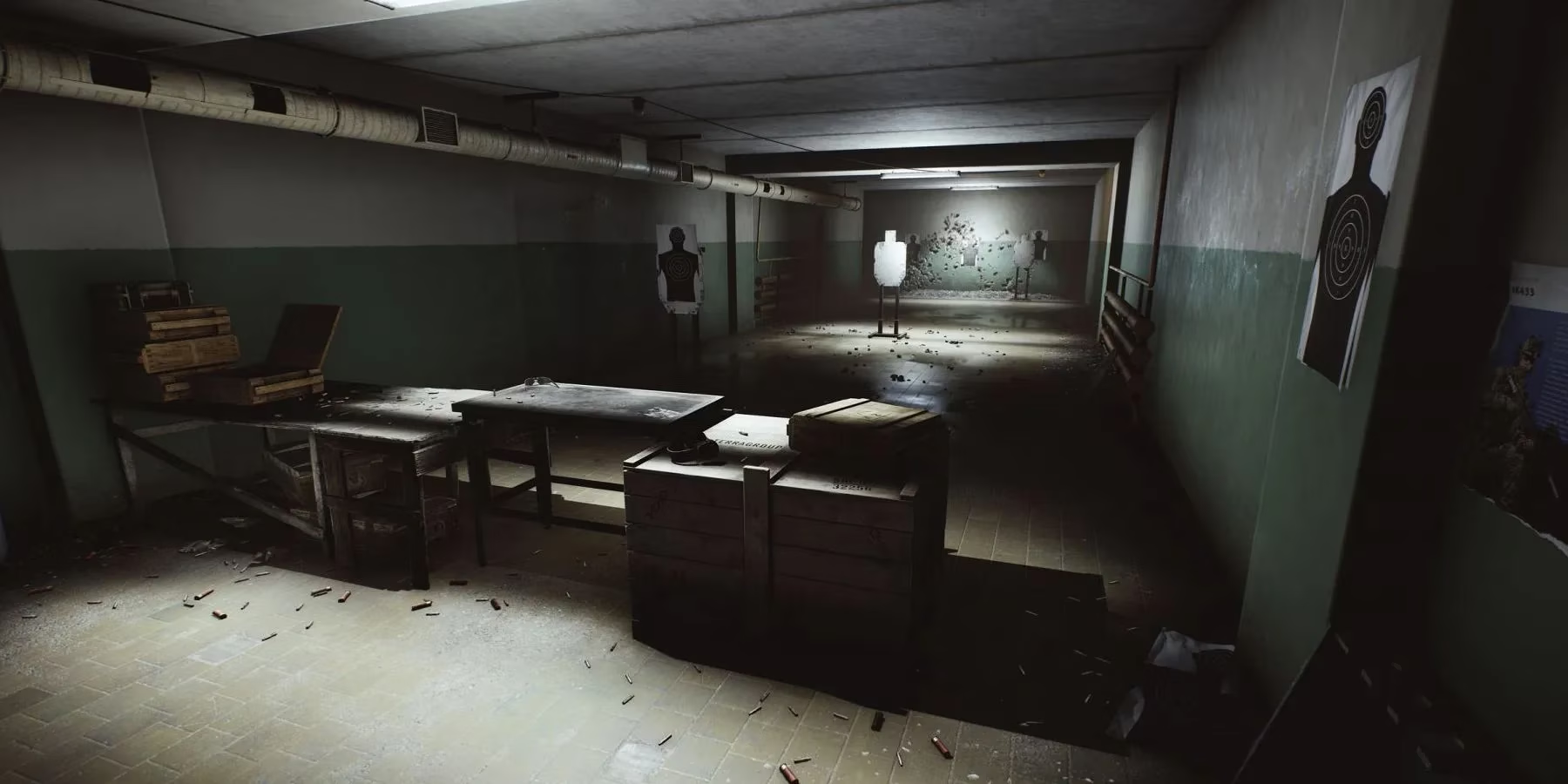
The Shooting Range is where things get personal. Players finally get to test weapon recoil, practice point-fire, and generally feel like a proper operator without dumping roubles into offline raids. It’s the hideout’s way of saying, “You put in the work, now enjoy your toy.” Vents, on the other hand, work silently but tirelessly, boosting out-of-raid HP regeneration and reducing the timer on the water filter, which means less time waiting and more time fighting. The Generator and Booze Generator are pure luxury meets necessity — one keeps the lights on and the fuel burning; the other churns out moonshine that can either trade for good gear or kickstart the Scav case lottery.
Then there’s the crafting bench, where Metal Spare Parts morph from raw clutter into items of genuine value. Combining them with nuts, bolts, and a sprinkle of patience yields the Lucky Scav Junkbox — a godsend for anyone whose stash looks like a grenade went off inside a hardware store. The Grenade Case is another space-saver, corralling all those F-1s and RGD-5s into a neat rectangle. And the FP-100 Filter Absorber isn’t just a mouthful to say; it’s a critical piece of kit for anyone diving into air filtration and longer raid sustainability. These recipes give the metal parts a second life, one that screams utility and order amid the chaos.
A smart looter never relies on a single map. Lighthouse has earned its reputation as a metal-rich playground, with wooden piles and the back of pickup trucks practically coughing up the goods. Interchange, with its labyrinthine backrooms of Goshan and OLI, continues to be a reliable fallback. Reserve is worth a mention too, especially around the train yard and the bunkers, but it demands a hunter’s caution — the map rarely lets visitors leave without a fight. Rotating between these locations prevents the burn of repetition and keeps the scav’s heart beating just a little faster.
The journey to collect enough Metal Spare Parts is rarely a straight line. Some days Tarkov will hand you three in a single filing cabinet, laughing softly at your disbelief. Other days, you’ll search every toolbox on Customs and find only crickets. That ebb and flow is part of the charm, if one can call it that. The key is to treat each raid as a small pilgrimage, and always — always — carry a bag big enough to hold what fortune throws your way. As of 2026, these unassuming fragments of metal still anchor the hideout’s soul and the crafter’s dream, proving that even the smallest piece can shoulder the greatest weight.