
As a veteran player who has weathered every storm in Norvinsk since the early access days, I can say that the launch of the 'Hardcore Wipe' in Escape From Tarkov feels like a fundamental reset of the game's very DNA. Patch 0.16.8.0, which went live recently, isn't just another seasonal update; it's a deliberate, aggressive stress test orchestrated by Battlestate Games as they march toward the mythical version 1.0 release after eight long years. This isn't about adding new guns or maps—it's about tearing down established player conveniences to see what the core loop looks like when pushed to its absolute limit. The community's reaction has been a volatile cocktail of fascination, frustration, and fervent theory-crafting about the future of this genre-defining extraction shooter.
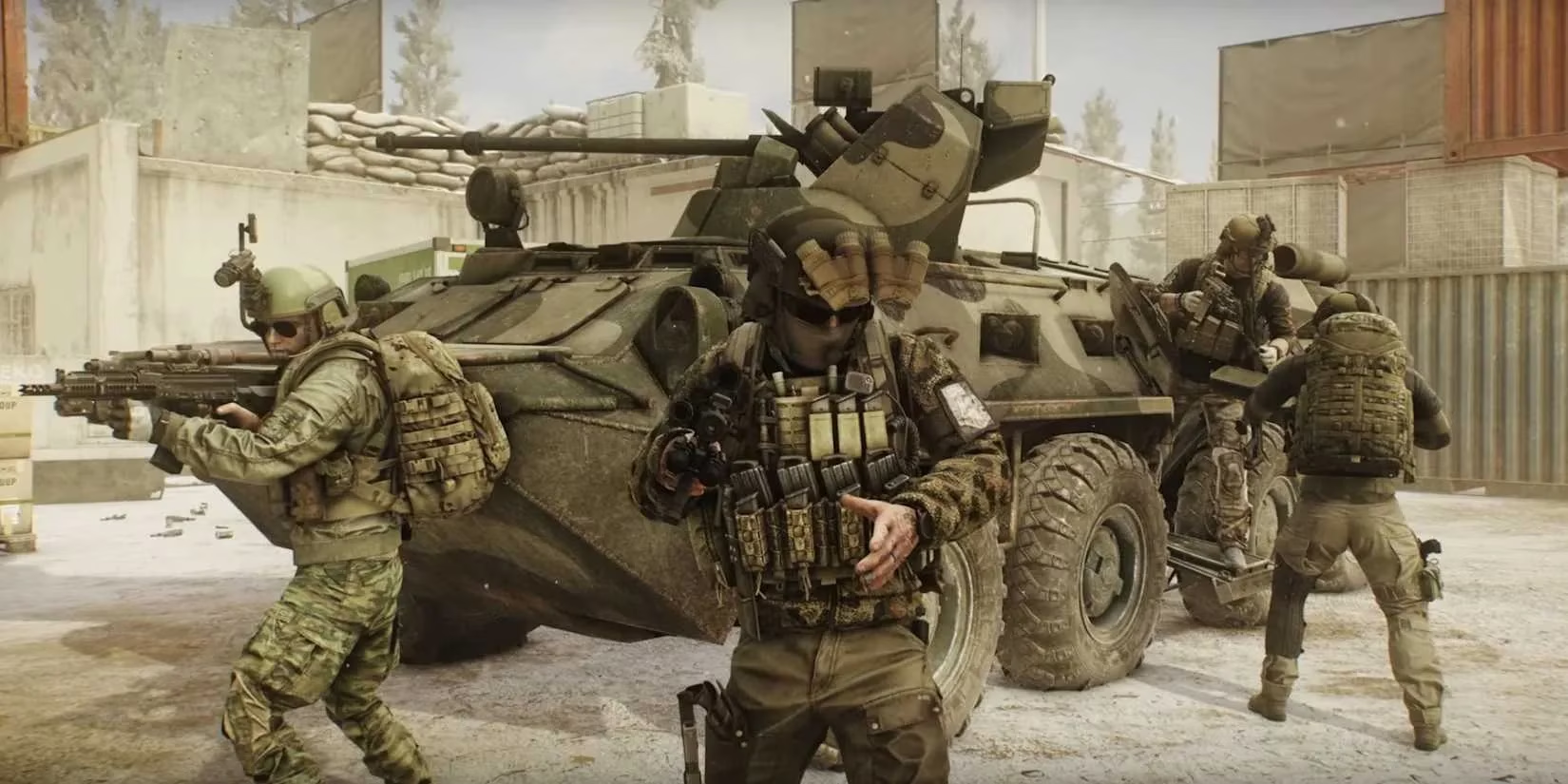
The most immediate and jarring change has been the mandatory enforcement of the location transit system. Remember when map travel was a neat alternative during the Marathon event? Now, it's the law of the land. To access most major locations like Streets of Tarkov or Lighthouse, you must first spawn into a connecting map and physically travel there. On paper, this creates a more immersive, interconnected world. In practice, it has created spawn-point chaos of legendary proportions. The system is deterministic: if you enter Streets from Ground Zero, you'll spawn at the point on Streets closest to that Ground Zero exit. When dozens of players all funnel through the same choke point, the result is a concentrated meat grinder. I’ve experienced raids where the first 30 seconds felt like the opening scene of Saving Private Ryan, with PMCs materializing on top of each other in a frantic, bloody scramble. Game director Nikita Buyanov quickly acknowledged this flaw, stating the team is actively working on a solution, but for now, it defines the early-wipe experience.
This transit requirement has had profound ripple effects. Player progression has slowed to a crawl. What used to be a quick hop into a Customs raid for a quest item now requires a multi-map journey, navigating the heightened risks at every stage. Interestingly, this has breathed unexpected life into previously neglected corners of the game world. Remote areas on larger maps are seeing more traffic as players seek alternative routes, creating novel and unpredictable engagements. However, this experimental design was initially compounded by another shocking decision: the temporary removal of all primary trader quests. Buyanov announced that only daily and weekly tasks would be active "for some period of time," a move that left the community bewildered about the core progression loop. This experiment, however, was short-lived. Following intense feedback, the developers backtracked within a day, confirming that standard quests would be reinstated. This rapid pivot highlights the reactive nature of this wipe—it's a live lab, and we are all the test subjects.
Why put players through this? The answer lies squarely in the vision for Escape From Tarkov Version 1.0. The developers have long teased a fully realized world where traders aren't just menu interfaces. In the final game, unlocking Prapor or Therapist won't be a click away; you'll need to physically journey to their in-world locations, navigating the dangers of Tarkov to establish contact. The mandatory map travel is a direct precursor to this system, forcing players to learn and navigate the connective tissue between zones. The brief removal of quests was likely a test to see how the economy and player behavior evolved without that structured guidance. A small but significant update has already been deployed based on community outcry, rebalancing insurance costs and Scav raid cooldowns to better fit the new transit-heavy reality. It's a clear sign that while the vision is rigid, the path to get there is flexible.
So, where does this leave us, the players, in 2026? This hardcore wipe is a fascinating, if sometimes painful, glimpse into Battlestate's endgame. It raises critical questions:
-
Player Agency vs. Designer Vision: How much inconvenience in the name of realism is too much?
-
The 1.0 Promise: Will these hardcore mechanics survive the transition to the full release, or will they be softened?
-
Community as Co-Developer: Our feedback is now directly shaping this pre-1.0 experiment in real-time.
The atmosphere in Tarkov has undeniably shifted. There's a palpable tension and a raw, survivalist feel that had been diluted over years of meta-optimization. Every journey feels perilous and meaningful. While the spawn issues need urgent fixing, the core idea—a truly connected, dangerous world—has immense potential. For now, the directive is simple: adapt or perish. Watch your angles, plan your routes carefully, and never assume your spawn is safe. This might just be the brutal, immersive Tarkov the developers have always dreamed of, and we are the first to live it—if we can survive.