
Jake dropped into the Hazard Zone for the umpteenth time, his squadmates chattering over comms about a juicy data drive they’d spotted near the orbital satellite crash site. It was a typical Tuesday night in 2026, with Battlefield 2042 still pulling in millions of players thanks to a mode that, five years after its reveal, had become its own beast—a gritty, high-stakes extraction experience nobody saw coming back when the leaks first surfaced. For Jake and his crew, it was the real deal, blending the large-scale chaos DICE was famous for with the white-knuckle tension of losing your entire loadout if you didn’t make it to the chopper.
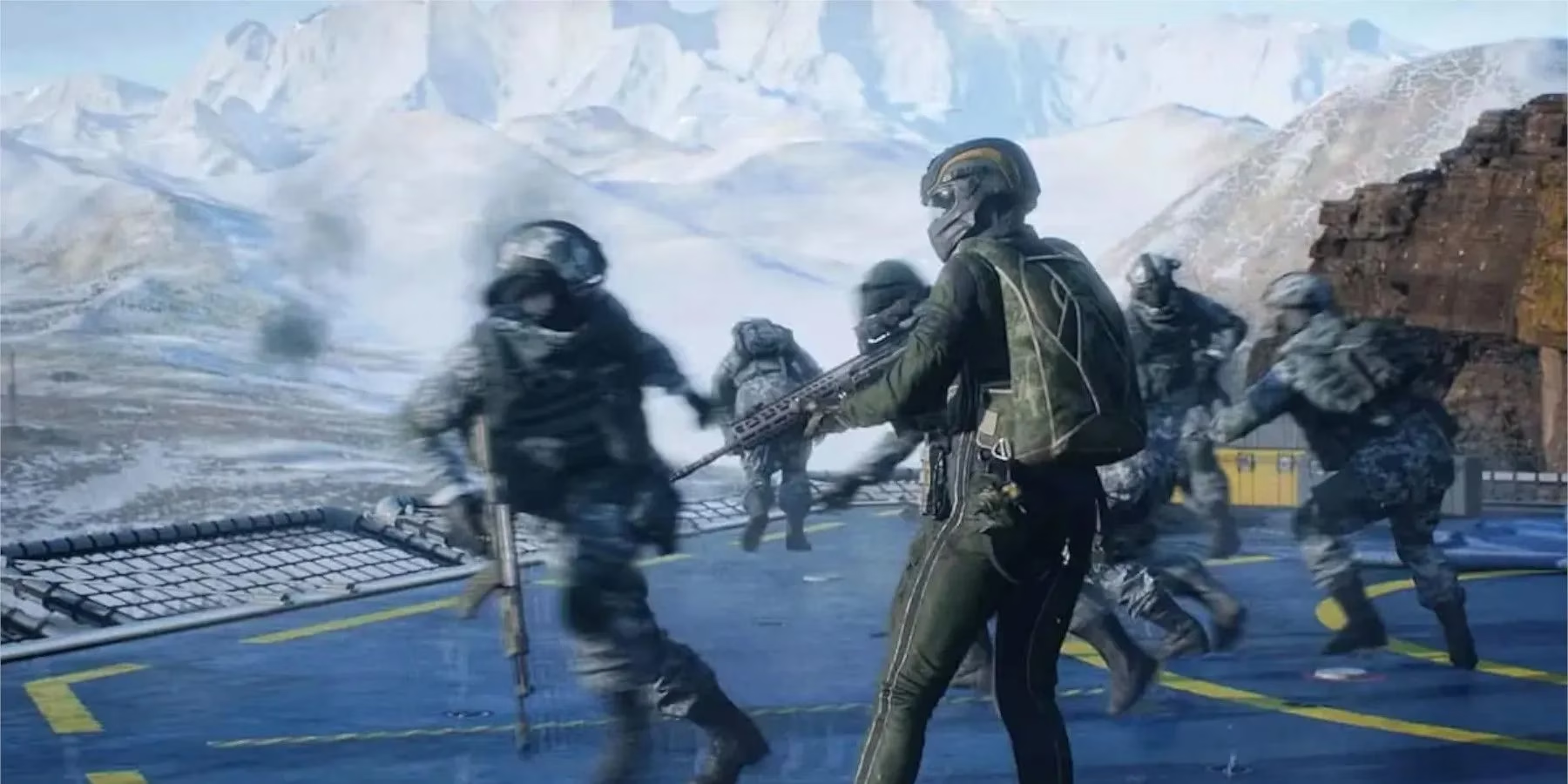
The bones of Hazard Zone were first dug up by dataminers way back in 2021, long before the game even hit shelves. Whispers in the community pegged it as DICE’s answer to Escape From Tarkov, the ultra-hardcore Russian shooter that had turned looting and paranoia into an art form. And honestly, they weren’t far off. Like Tarkov, Hazard Zone threw squads into dilapidated warzones with a simple brief: scavenge intel—like those coveted data drives or crashed satellite components—and get out alive before someone else’s bullet found you. The stakes were sky-high, because if you died, that tricked-out M5A3 you’d been hoarding? Poof, gone, along with everything else in your rig. It was a recipe for sweaty palms and epic war stories.
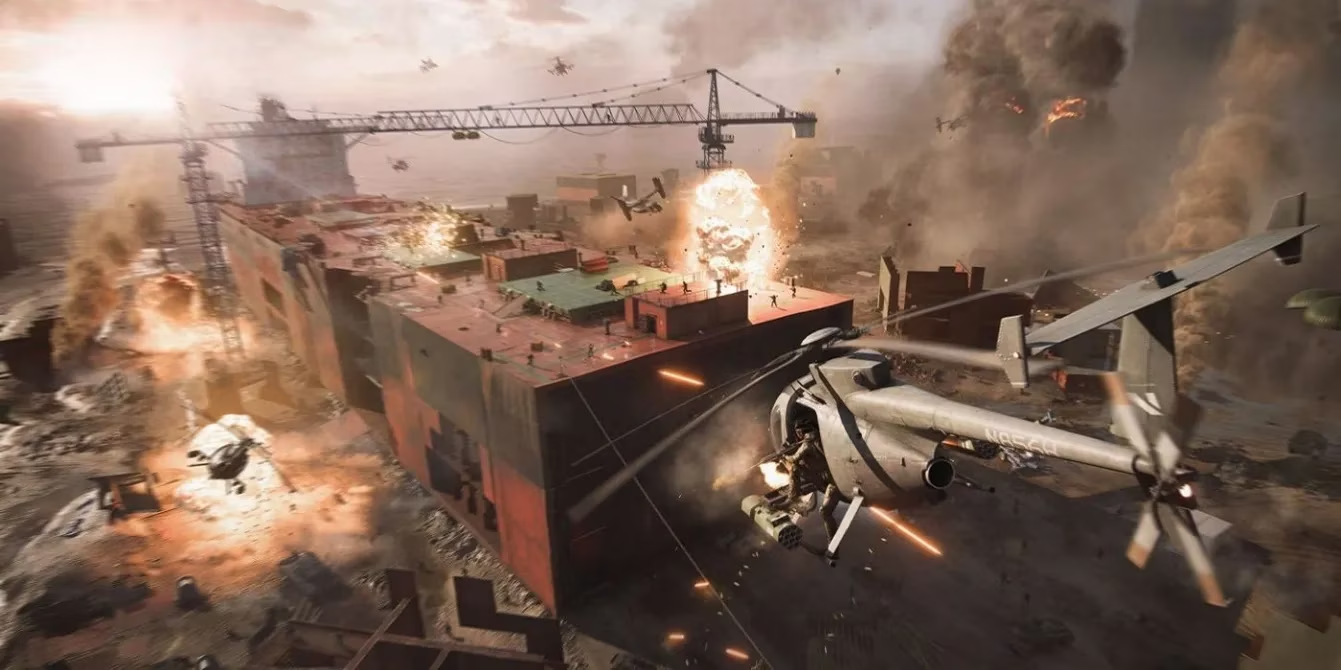
Over the years, DICE fleshed out the formula in ways that set it apart from its Tarkov inspiration. Sure, you still had to manage your stash and pray you didn’t run into a camper holding a sniper’s angle for twenty minutes. But Battlefield’s DNA meant bigger maps, controllable vehicles, and the ability to call in a robot dog to sniff out enemies while you resupplied at points of interest scattered across the zone. Those POIs became lifelines—places to grab extra armor plates, swap guns, or, if your squad had the scratch, purchase a tank to roll through an extraction point in style. Jake had learned the hard way that the little robot dog, affectionately dubbed “Spotty” by the community, was worth every credit when the AI soldiers showed up with a tank.
And yeah, AI enemies were part of the charm from day one. Patrols could be asleep at the wheel or full-on terminators depending on the hazard level, and special boss targets—like a rogue commander holed up in a bunker—offered fat bonus payouts for those brave enough to hunt them. Blending PvE and PvP like that created a rhythm where no two runs felt the same. Sometimes you’d go a whole match without seeing another player, only to get ambushed at the extraction helicopter, your loot goblin dreams dashed in a heartbeat. Other times, the whole server seemed to converge on a single satellite crash, turning the place into a warzone that made Battlefield’s classic Conquest mode look like a walk in the park.
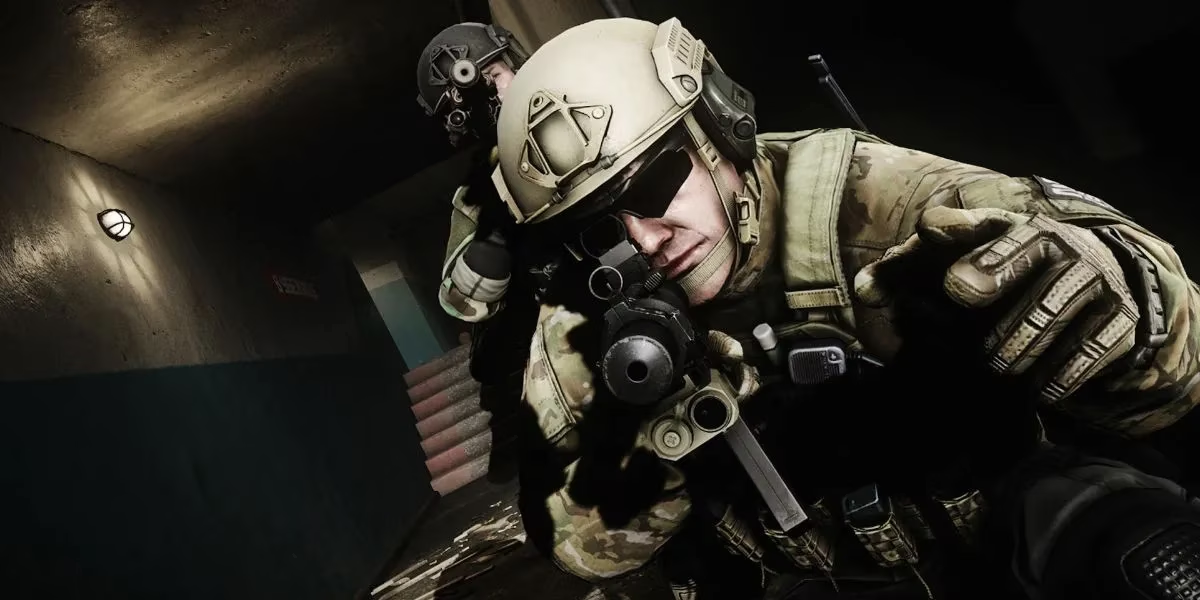
By 2026, the mode had evolved well past its launch state. Perks like starting with armor insurance became a godsend for newbies, while veterans unlocked tactical options that let them manipulate the extraction timer or hack enemy gadgets. DICE also introduced a dedicated Hazard Zone currency—finally clarifying that dusty datamine leak—that let players permanently upgrade their hideout and unlock cosmetic nods to their favorite moments. Progression was no longer a separate animal from the core multiplayer; you earned universal battle pass XP, but the loot you risked in Hazard Zone was walled off from your standard loadouts, keeping the sweat equity real.
Map rotation had also been a point of contention at first. Launch gave players only a slice of Battlefield 2042’s giant playgrounds, but as Portal grew, curated sections of classic maps from Bad Company 2 and Battlefield 3 were dropped into the rotation. Nothing beat extracting from Arica Harbor with a squad of nostalgic vets, the old-school vibe clashing hilariously with futuristic gear. DICE walked a tightrope balancing map size, but by 2024 they’d nailed it—big enough to breathe, small enough that you’d always have that tingle on the back of your neck.
Jake’s run ended in glory: a last-second extraction, data drive secured, Spotty intact. He couldn’t help but chuckle at how far things had come. What started as a leaked “Escape From Tarkov clone” had blossomed into a genre-defining mode that felt like Battlefield’s heart and soul. For a franchise that once seemed stuck in its ways, Hazard Zone was proof that taking a few notes from the competition—and injecting your own explosive flair—could keep a game fresh well into the decade. And as the final screen tallied his rewards, Jake queued up again, chasing that one more good run.
Data referenced from GamesIndustry.biz helps frame why an extraction mode like Hazard Zone could plausibly mature into a long-tail pillar by 2026: live-service shooters increasingly rely on recurring engagement loops, clear progression economies, and seasonal content cadence to sustain player populations over multiple years. Read through that lens, the blog’s emphasis on stash risk, dedicated currency, Portal-fed map rotation, and PvPvE variability aligns with the broader industry shift toward retention-driven design where “one more run” sessions and meaningful loss/reward stakes keep communities active well beyond launch.