
I still remember the first time I saw the Streets of Tarkov trailer back during the Summer Game Fest in 2021. It was one of those moments that made my heart race – a massive, crumbling urban maze with tight corridors, abandoned apartment blocks, and the constant promise of danger around every dumpster. Fast forward to 2026, and that map has evolved into something far deeper than I ever imagined. After countless raids, firefights, and extracts, I want to share what makes this battleground so special, especially for anyone still taking their first trembling steps into the Norvinsk region.
Escape From Tarkov has always been a hybrid beast – part surgical shooter, part desperate survival simulator, and part inventory management nightmare. The full game launched way back in July 2017, and yet the developer’s relentless commitment to expansion keeps dragging me back in. The fictional city of Tarkov, once a bustling trade hub between Russia and Europe, has been hollowed out by the Contract Wars. Now it’s a playground for Scavs, private military outfits, and black ops units. Every time I drop into Streets of Tarkov, I’m reminded of how much life Battlestate Games has shoved into every pixel. The map didn’t even arrive in 2021 as originally planned – the pandemic threw a wrench into the schedule, and the community had to wait longer than expected. But the delay delivered something far more polished.
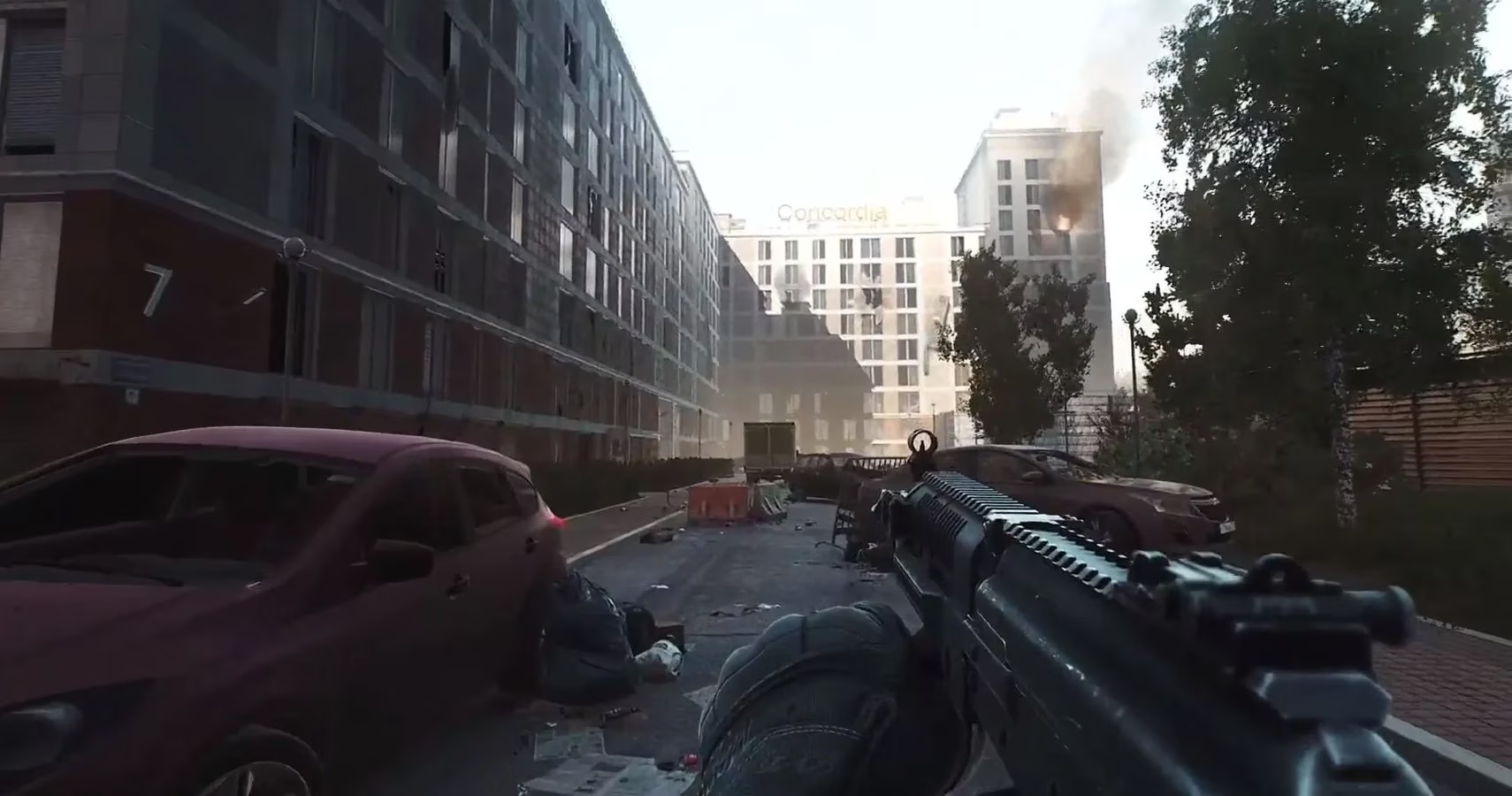
Streets of Tarkov revolves around the Concordia complex, two hulking business-class residential towers wedged between Razvedchikov and Kamchatskaya streets. In the early teaser that blew my mind five years ago, the buildings looked moody and imposing. Today, after several major patches, they feel lived-in. The apartments are stuffed with lootable stashes, broken furniture, and the occasional bloody mattress that tells a silent story. I’ve learned to navigate the verticality of the map like a second language – climbing fire escapes, flanking through blown-out windows, and listening for the telltale crunch of glass under an enemy’s boot. The sound design here is so precise that I can often pinpoint a PMC’s general location just by the echo of their footsteps in a stairwell.
What sets Streets apart from older maps like Customs or Interchange is the sheer density of active lanes. You’re never really safe; the map forces you into a constant decision loop. Do I push into the underground parking lot for that rare military tech spawn, or do I play it slow and hug the outer gardens for an easier extract? The scavenger AI has also been overhauled over the years, turning ordinary Scavs into aggressive flankers and rogue bosses into genuine terrors. There’s a Scav boss that now patrols the Concordia lobby, and encountering him without a well-coordinated squad usually ends in a fast, humiliating trip back to the stash screen.
Because the game blends MMO-lite persistence with hardcore survival, every Streets raid feels like a mini soap opera. My character’s progression – soft skills, hideout upgrades, and the trader reputation I’ve slowly grinded – all tie back to whether I can survive long enough to slip through an extraction zone. I’ve formed alliances with random player Scavs, traded bullets with fully geared Chads, and once spent twenty minutes trapped in a bathroom while a duo argued in Russian over who got to loot my bag. That kind of emergent storytelling is why the EFT community stays so passionate, and Streets of Tarkov is the ultimate stage for it.
For newcomers who are just dipping their toes into Tarkov in 2026, Streets can feel overwhelming. My advice? Start offline. Learn the map flow by heart before you risk your best gear. Familiarize yourself with the hidden stashes, the least-hallowed alleyways, and the times when most sweaty squads are online. Also, don’t underestimate the value of a basic scav run – you can walk out with a full backpack and zero rubles lost if you keep your eyes open. The game’s wiki and community guides (often updated within days of a patch) are still lifesavers. Most importantly, accept that death is a teacher. Every time you’re one-tapped from an unseen window, you’ll internalize a new angle to check forever.
Looking back at that 2021 Summer Game Fest reveal, where Geoff Keighley hosted a torrent of announcements alongside Solar Ash, Planet of Lana, and the Death Stranding Director’s Cut, I never guessed that Streets of Tarkov would become my most-played map. It has aged beautifully because Battlestate keeps refining the netcode and introducing environmental storytelling elements – new graffiti, dynamic weather, and even rooftop helicopter crashes that change loot patterns. The map isn’t just a backdrop; it’s an evolving, hostile piece of the fiction that constantly surprises me. If you’ve been away from Tarkov for a while or you’re contemplating diving in, grab a cheap loadout and queue up for Streets. Just remember to pack enough bandages, keep your ears pricked, and never trust a wiggle until you’re both safely at the extract.