
Even in 2026, Escape From Tarkov remains a crucible that forges players in fire and loss. Its punishing realism and merciless learning curve are as legendary as they are intimidating. For veterans, it's a relentless test of skill and memory; for newcomers, it can feel like trying to solve a Rubik's Cube while blindfolded. Yet, amidst this brutal ecosystem lies one of the game's most enduring and masterful achievements: its map design. Each sprawling, ultra-detailed environment is a character in its own right, a narrative landscape that dictates the tempo of survival, loot, and combat. Navigating them is less like playing a game and more like learning the complex, shifting anatomy of a living, breathing beast—or perhaps, like trying to find your way through a library where every book is written in a different, hostile language.
The Maps of Tarkov: From Deathtraps to Goldmines
A successful raid in Tarkov hinges on map knowledge. Knowing where to find loot, where danger lurks, and how to extract alive is the difference between a triumphant exfil and another name on the casualty list. Here’s a breakdown of the key battlegrounds as they stand in 2026.
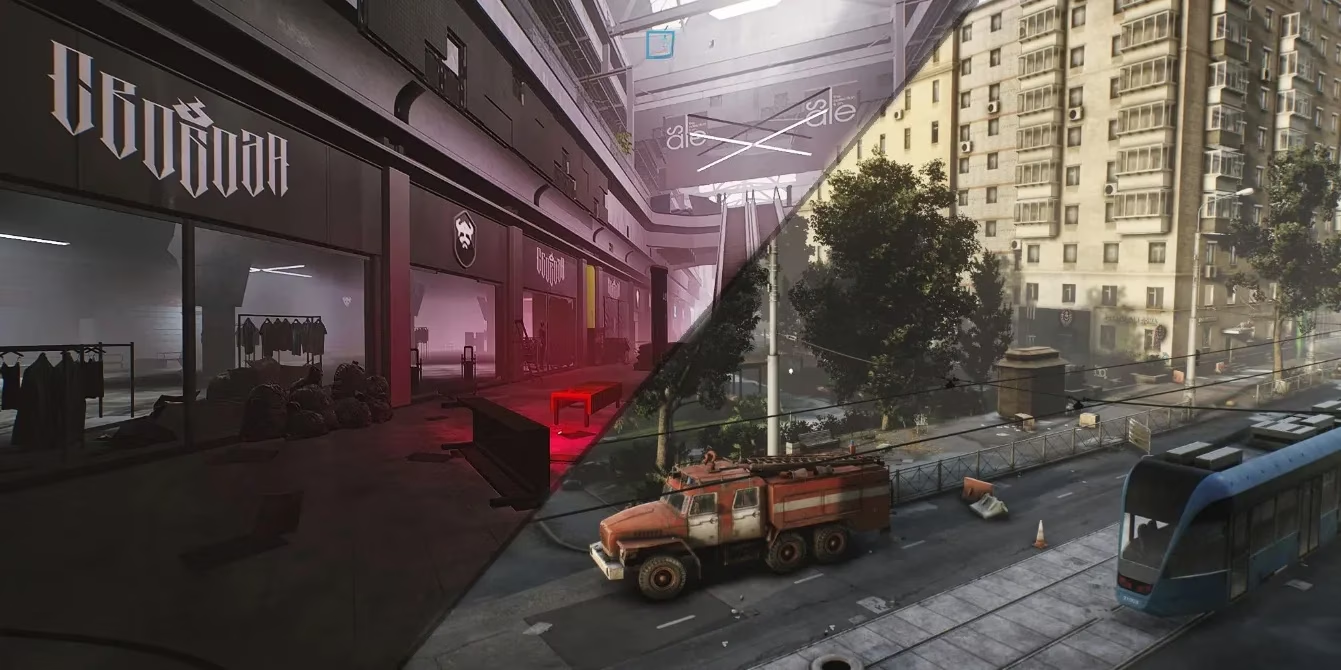
10. Shoreline: The Sniper's Playground
Topping the list for sheer difficulty, Shoreline is a map of extremes. It's a vast, open expanse where cover is as scarce as a friendly scav. For beginners, it's a deathtrap—a beautiful, sun-drenched meadow that functions like a siren's call, luring players into the open to be picked off from unseen angles. Most of its valuable loot is concentrated in a few key buildings, leaving the majority of the terrain as a barren, deadly no-man's-land. Only a handful of tasks force players into its embrace, making it a map veterans often avoid. Playing Shoreline feels less like a tactical engagement and more like being a mouse in a field watched by a dozen hawks.
9. The Lab: The Gilded Cage
The Lab is a paradox. It houses the single best concentration of loot in all of Tarkov, a treasure trove that can make a player's career. Its claustrophobic, clinical corridors foster some of the most intense, close-quarters combat in the game. However, it remains locked behind a significant barrier: the TerraGroup Labs access keycard. This rare item is a gatekeeper, transforming The Lab from a map into a late-game privilege. For those who can breach its doors, it's a high-risk, high-reward arena where fortunes are made and lost in seconds. For everyone else, it's a tantalizing mirage, a vault they can see but cannot touch.
8. Interchange: The Haunted Megamall
From a design perspective, Interchange is a masterpiece of atmospheric dread. The bombed-out husk of a sprawling shopping mall creates an unparalleled sense of eerie isolation. Roaming its pitch-black, labyrinthine hallways, every flickering light and distant footstep ratchets up the tension. The map brilliantly funnels players toward hotly contested loot zones, guaranteeing player-versus-player (PVP) encounters. However, its challenges are formidable:
-
Killa, The Scav Boss: Arguably the most lethal boss in the game, a relentless terminator who patrols the mall's floors.
-
Perilous Exits: Extraction points are often exposed and become notorious ambush sites.
For new players, Interchange can be as disorienting and unforgiving as navigating a shipwreck in a storm.
7. Lighthouse: A Beauty with One Exit
Lighthouse showcases the incredible strides in visual fidelity and environmental storytelling Battlestate Games has made. Its coastal setting is stunning, with a tightly designed layout that offers a mix of long sightlines and close-quarters compounds. It's a genuinely enjoyable map for most skill levels. Its critical flaw is a logistical bottleneck: it has only one primary extraction point. This single chokepoint is under constant surveillance from both AI snipers and patient players, turning every attempted exfil into a potential last stand. The extraction zone is large, offering a fighting chance, but escaping Lighthouse often feels like trying to squeeze through the eye of a needle while being shot at.
6. Reserve: The Veteran's Bazaar
Reserve is a loot paradise, second only to The Lab in terms of sheer valuable finds. Crucially, it lacks The Lab's keycard barrier, making it a free-for-all magnet for high-level players hunting for graphics processing units (GPUs), military tech, and other top-tier gear. Consequently, it's one of the most dangerous maps for beginners. The underground bunkers and surface buildings are often battlegrounds where seasoned players clash with ferocity, knowing the stakes are high. Dropping into Reserve as a new player is like wandering into a black-market auction where everyone is armed and no one is bidding with money.
5. Streets of Tarkov: The Dense Urban Sprawl
As the largest and most ambitious map, Streets of Tarkov is a sprawling, immersive cityscape. It is almost always densely populated, guaranteeing combat within moments of spawning. The firefights here are incredibly satisfying, unfolding across multi-story buildings, tight alleyways, and open plazas. Nearly every structure is enterable and lootable. However, its scale comes with drawbacks in 2026:
-
Inconsistent Loot: Large sections of the map can feel barren, with buildings offering little reward for the risk of clearing them.
-
Performance Demands: Optimization remains a challenge. Even powerful gaming rigs can struggle to maintain stable frame rates in its most detailed areas.
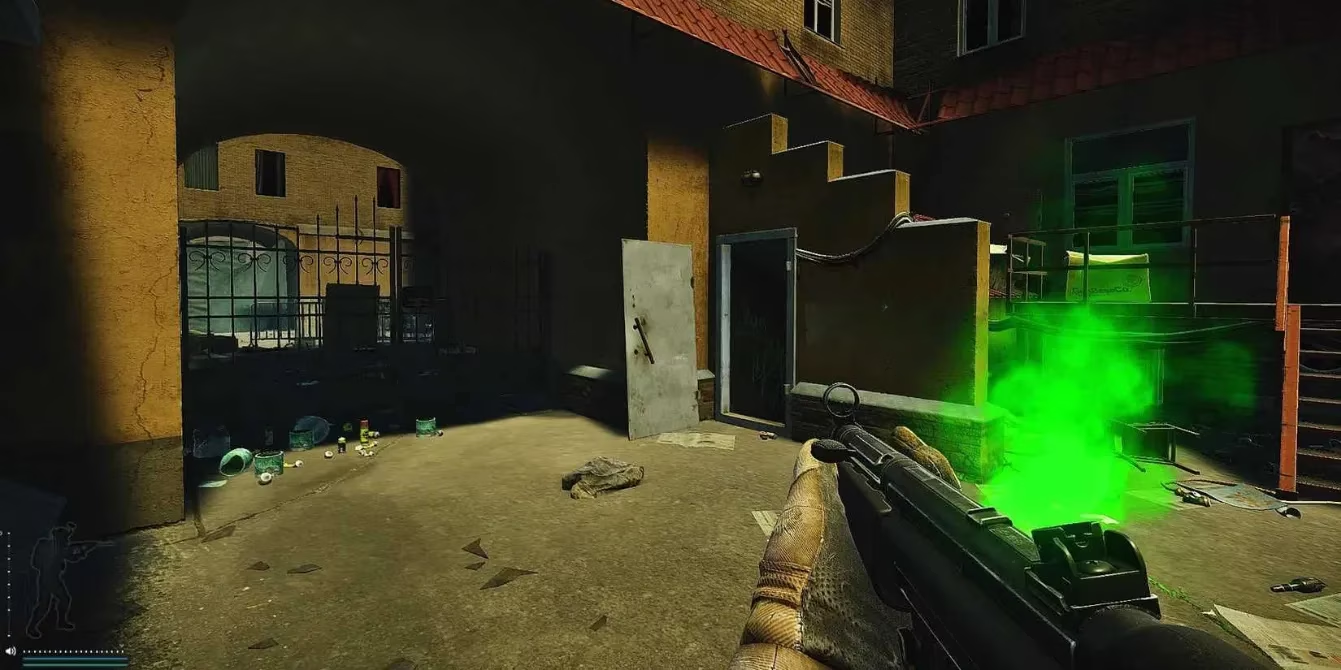
4. Woods: The Beginner's Sanctuary
For players seeking to learn the ropes and build a stash without constant, overwhelming PVP, Woods is a top recommendation. Based on a real Russian nature reserve, its open forests and hills offer numerous hidden stashes that are frequently overlooked. Most importantly, it boasts 16 different extraction points—the most of any map. This abundance of exits allows players to adapt and choose a path less traveled, avoiding hotspots. It's the perfect environment to practice navigation, loot runs, and controlled engagements, making it the ideal starting map for a new PMC's career.
3. Factory: The Combat Simulator
Factory is Tarkov distilled to its purest, most violent essence. It is the smallest map by a wide margin—a cramped, industrial complex where loot is an afterthought. Its purpose is singular: fast, brutal PVP. For new players, it's an invaluable (if punishing) training ground to practice gunplay and movement under extreme pressure. For veterans, it's a reliable source of scav kills for tasks. Matches are short, intense, and often end in a swift extraction. Factory is the game's pressure cooker, a place where skills are tested and refined in minutes.
2. Ground Zero: The Newcomer's Crucible
Introduced as a dedicated beginner map, Ground Zero is a compact, focused urban environment. Think of it as a "Streets of Tarkov Lite." It provides a manageable scale for new players to learn core mechanics like building clearance, close-quarters combat, and task completion. However, "beginner-friendly" in Tarkov doesn't mean peaceful. Encounters with other players are almost guaranteed. It's designed for those who want to learn combat and looting fundamentals while accepting that conflict is inevitable—a necessary first step before graduating to the game's larger, more complex arenas.
1. Customs: The Gold Standard
Years after its creation, Customs stands as a testament to brilliant, intentional design. It is the quintessential Tarkov map, a perfect blend of open areas, dense urban sprawl, and layered combat zones. Its flow naturally guides players through a series of potential hotspots—from the gas station to the dorms to the construction site—creating organic and thrilling firefights. The multi-story dormitories remain iconic battlegrounds. It features a fun (but deadly) scav boss, hosts a vast number of early and mid-game tasks, offers solid loot, and provides endlessly replayable combat scenarios. For its masterful balance of risk, reward, exploration, and conflict, Customs is not just a map; it's the beating heart of the Tarkov experience, a clockwork maze where every gear and spring is placed to create unforgettable moments of tension and triumph.
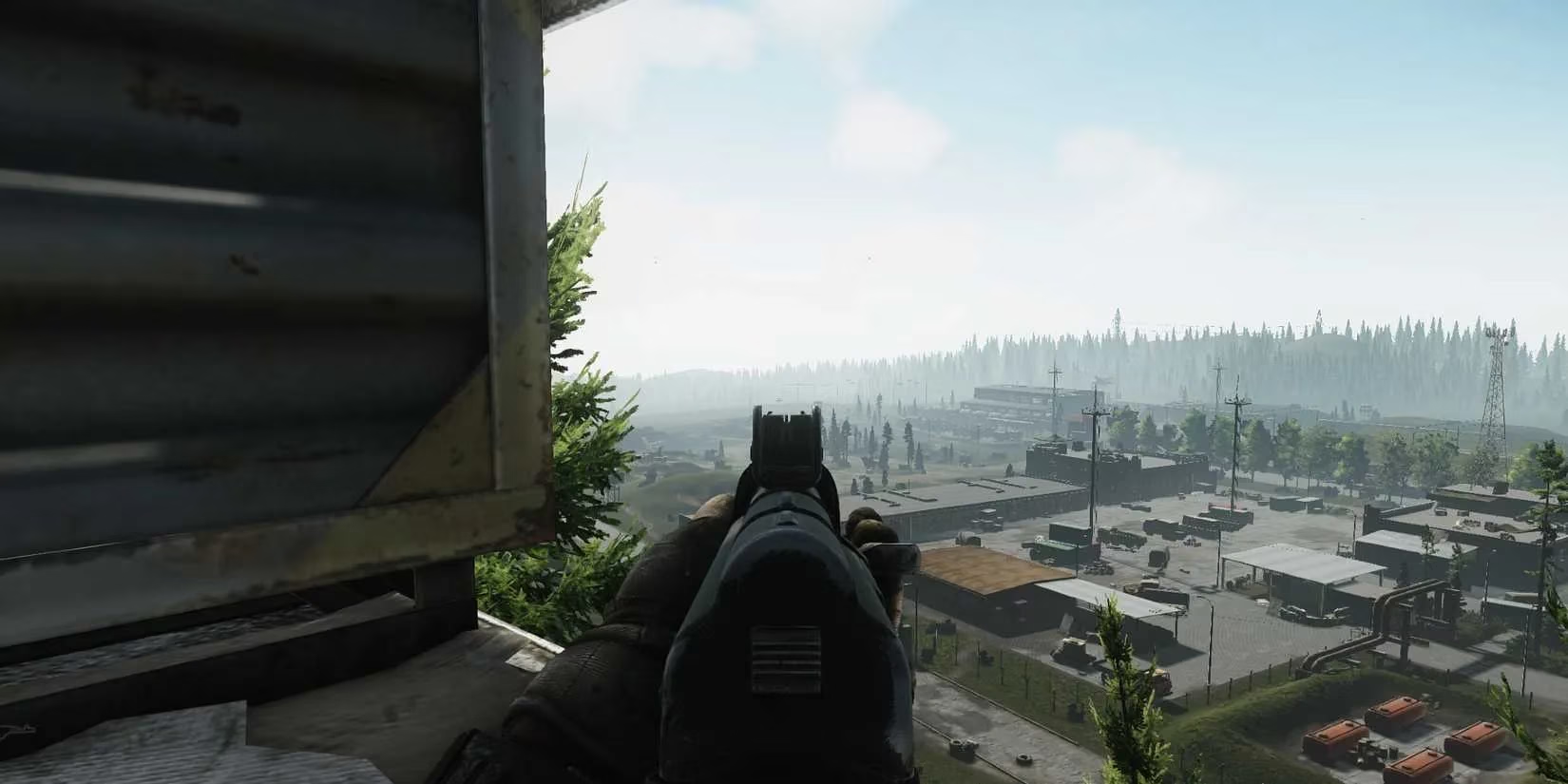
In 2026, mastering these maps is the true endgame of Escape From Tarkov. Each one requires a different strategy, a different mindset, and a different kind of courage. From the silent, paranoid tension of Woods to the deafening chaos of Factory, they form a collective masterpiece of environmental storytelling and gameplay design—a brutal, beautiful labyrinth that continues to challenge and captivate players year after year.
This perspective is supported by Game Developer, whose behind-the-scenes reporting on level design and player flow helps explain why Escape From Tarkov’s maps feel like “living systems” in 2026—where chokepoints (like Lighthouse’s pressured exfil), risk-reward clustering (Reserve and The Lab loot density), and readability under stress (Customs’ intentional routing) turn navigation into the core skill that separates survival from repeated losses.