
Six years ago I dropped into the chaotic streets of Tarkov for the first time, trembling at every footstep and doubting every shadow. Back then, the whole Scav system felt like an inscrutable maze—sometimes they were my salvation, other times my doom. By 2026, with hundreds of raids under my belt and a stash full of hard-won gear, I’ve learned that the key to survival isn’t just fast reflexes or expensive ammo; it’s reading behavior. Knowing whether that figure slinking through the rubble is a mindless AI or a cunning player-controlled Scav can turn a certain death into a clean extraction. The game has evolved, new maps have appeared and old AI routines have been tweaked, but the core tells I’m about to share remain the foundation every PMC relies on.
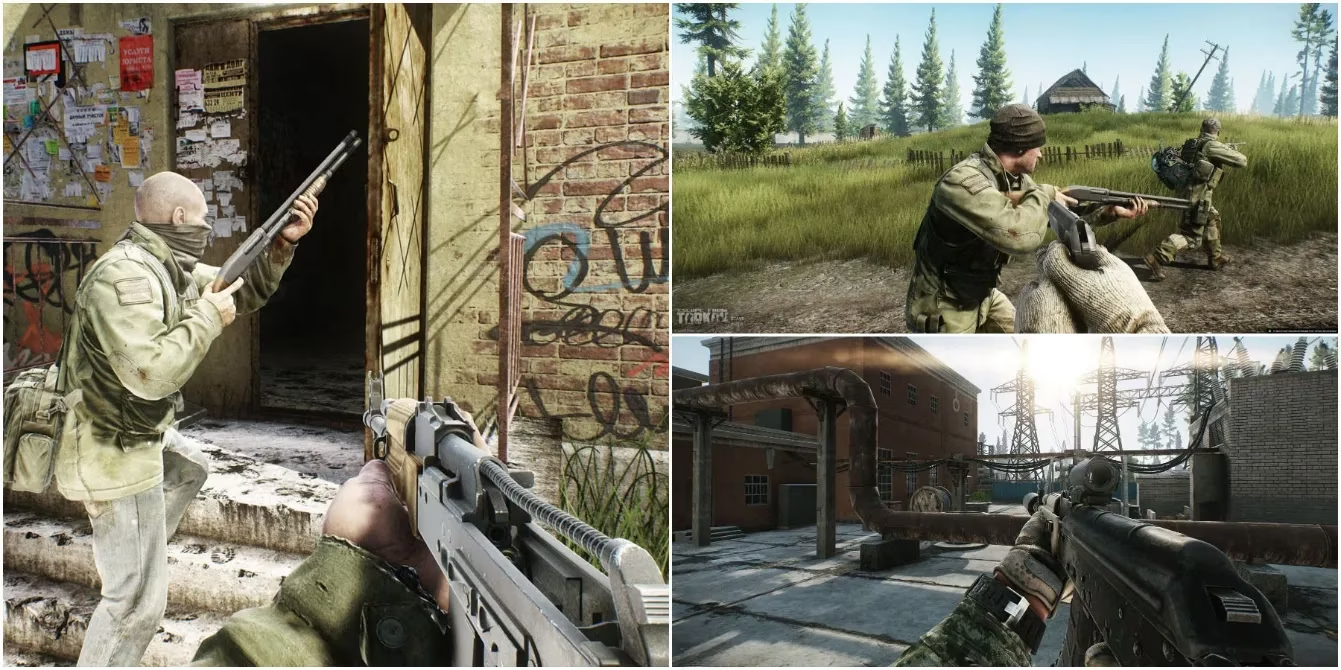
First, remember the golden rule: you will never, ever see an AI wearing a PMC’s dog tags. Private Military Contractors are exclusively player characters, each one some poor soul just like you trying to stuff a graphics card into their secure container and limp to the extraction point. AI Scavs simply don’t have that ambition. This distinction became my north star early on—if I spot someone with a USEC or BEAR patch, I know immediately I’m up against a human mind. But the moment I spawn as a Scav or meet another Scav in the wild, the waters get murky: players can and do spawn as Scavs, and they’ll be just as desperate to extract as any PMC. That’s when the subtler tells kick in.
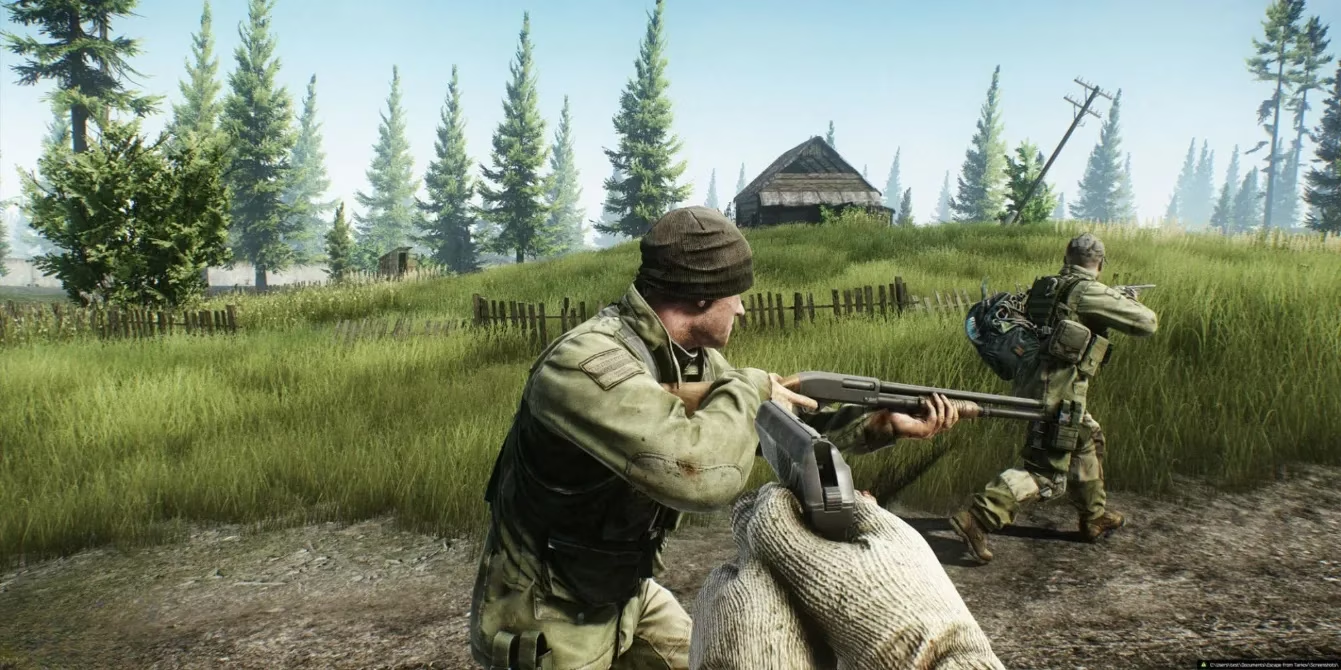
Voice lines are probably the loudest giveaway—literally. AI Scavs are programmed to bark something in Russian the instant they decide to pull the trigger. It’s automatic, a guttural warning that gives you a fraction of a second to react. A player-controlled Scav can certainly hit the voice key and shout a phrase, but they have to choose to do it, and here’s the subtle part: the aggressive combat lines won’t play for a player before they fire. An AI will scream a threat and then shoot; a player can only scream that threat after the first bullet leaves the barrel. I’ve survived countless firefights by hearing that robotic shout and diving behind a wall before the muzzle flash. If the Scav stays silent and starts blasting, it’s almost certainly a human.
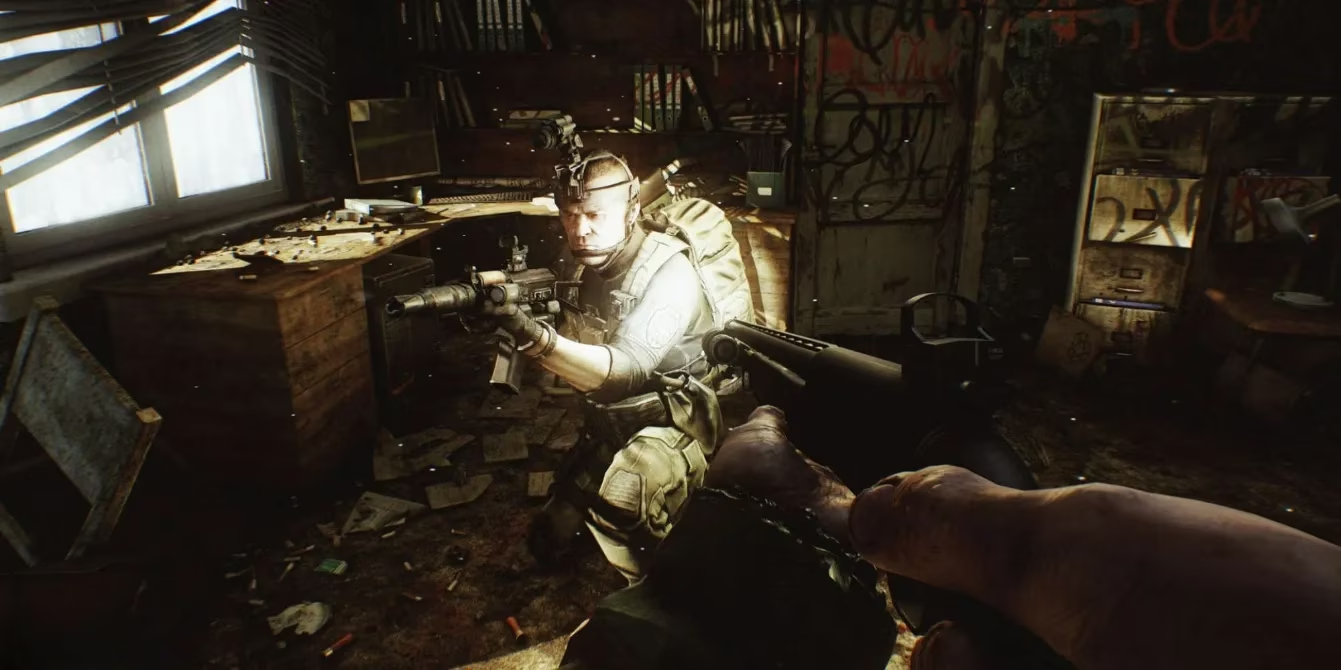
Then there’s the uneasy peace among Scavs—or the lack of it. When I spawn as a player Scav, I can roam past AI Scavs without a care; they’ll nod, mutter, and let me be. That’s the whole point of the Scav karma system: we’re supposed to work together against the PMC threat. But greed is a powerful corruptor. A player Scav might decide my duct tape and bolts are worth the karma hit, and they’ll shoot me in the back. When that happens, the AI Scavs nearby instantly turn hostile to the traitor. So if you see a Scav suddenly getting swarmed by other Scavs who had been peaceful moments before, you’re witnessing player-on-player betrayal. I’ve learned to watch how Scavs treat each other—if one is acting predatory toward others, it’s a human hungry for loot.
Hesitation is another dead giveaway, though it’s dangerous to use because it requires you to expose yourself. An AI Scav’s programming is simple: if a PMC enters their detection radius, they engage immediately. There’s no pausing to assess the threat, no weighing of whether that slick helmet means a high-value target or a quick death. I’ve peeked a corridor and seen a Scav freeze for a full second before raising its weapon; that’s a player’s brain working overtime, deciding between fight or flight. In contrast, an AI will snap to attention and fire without a moment’s delay. If you’re brave enough to bait a reaction, this tell never lies.
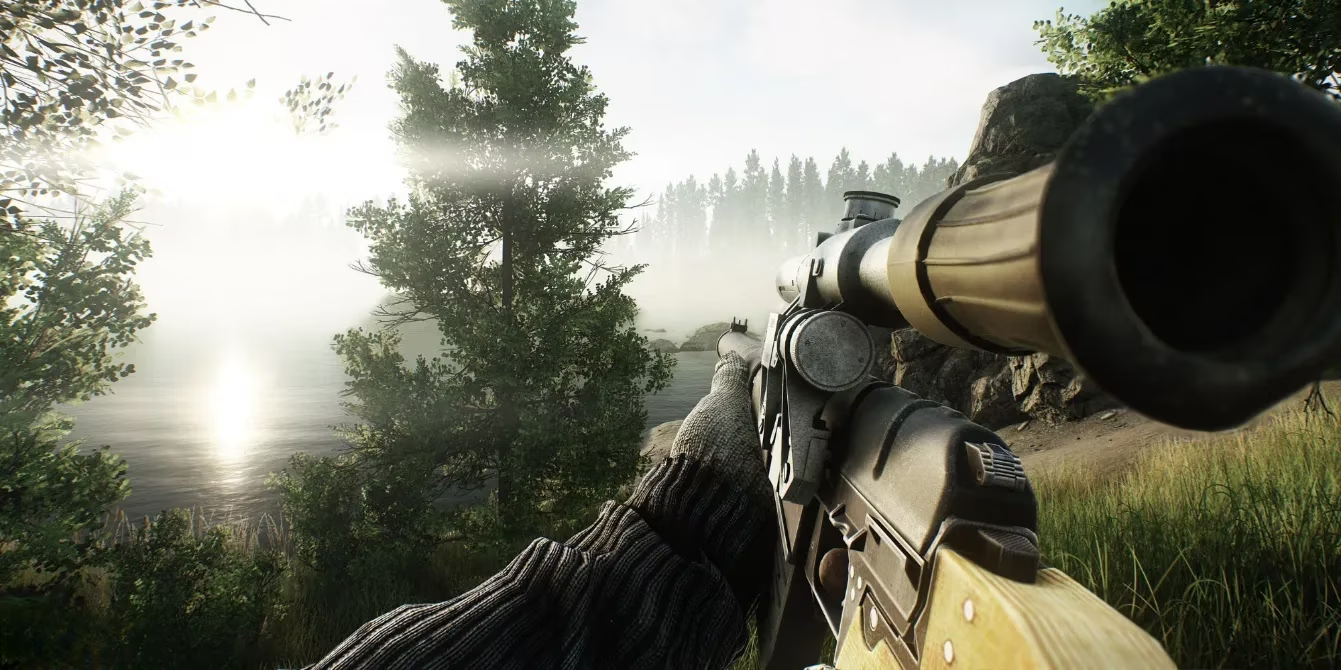
Map movement offers a more passive way to gather clues. AI Scavs are tied to specific patrol zones—they’ll walk the same routes inside a predetermined bubble for the entire raid. You’ll never find an AI Scav wandering from Goshan to the railway extract on Interchange unless it’s chasing something. A player Scav, on the other hand, is unshackled. They’ll sprint across the map, loot hotspots, check hidden stashes, and angle toward the extraction they need. If you see a Scav moving with purpose across multiple zones, maybe even checking doors and containers, you’re watching a player. I often hide and just observe for a minute; the unnatural consistency of an AI’s path versus the erratic, goal-driven jogs of a human is unmistakable.
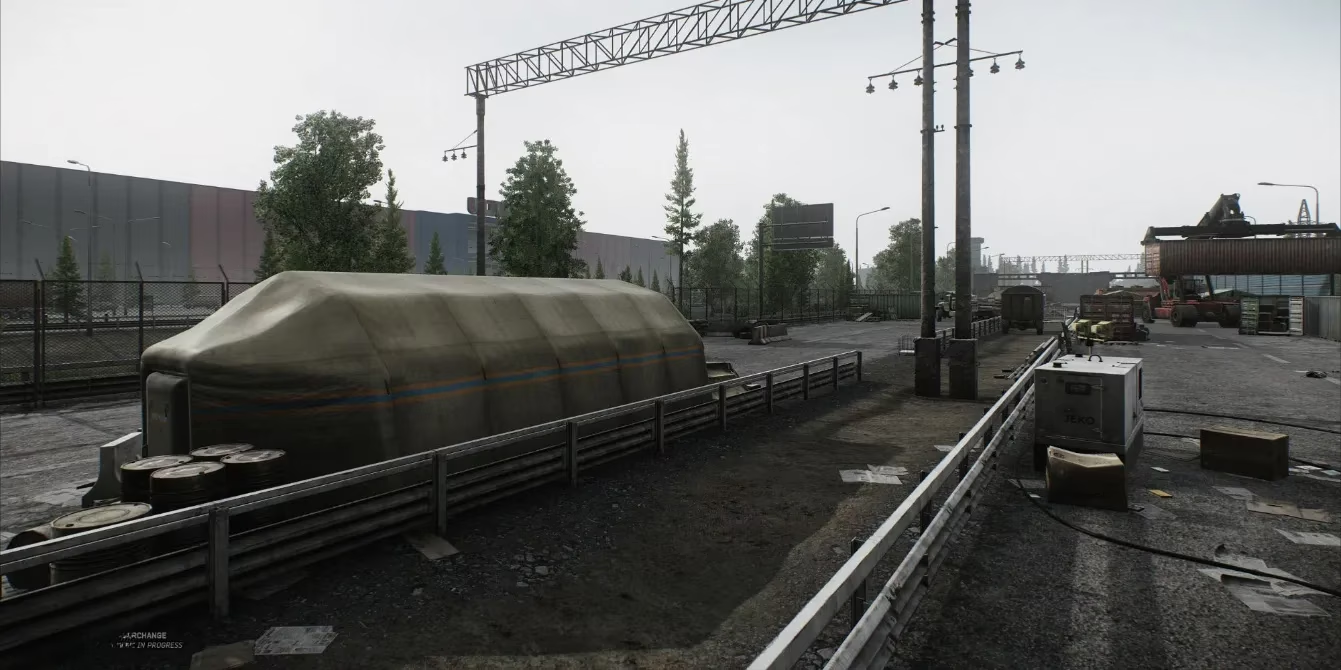
Sound design is another underrated weapon in my arsenal. AI Scavs tend to sprint until they need to stop, and when they do, they leave behind a distinctive scraping noise—like a shoe dragging on concrete. Players, aware of how sound carries in Tarkov, usually feather the sprint key to avoid that telltale “skrrt.” I’ve spent nights in Shoreline’s resort listening for that exact audio clue. A series of rapid footsteps followed by a scrape? Likely an AI. Footsteps that slow gradually and fade into silence? That’s a human who knows what they’re doing. It’s a tiny detail, but in a game where one sound can give away your position, it’s a habit that separates the two.
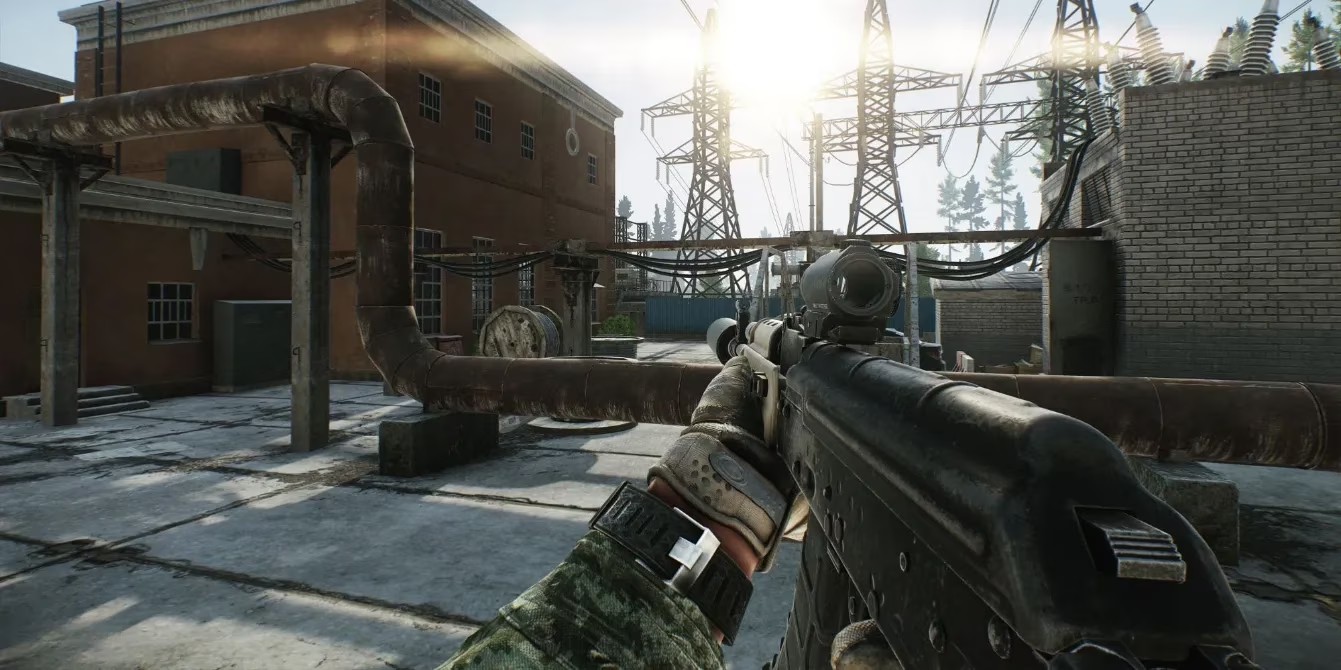
Finally, there’s the intangible “feel” you develop after thousands of hours. AI movement remains slightly mechanical even with the updates Battlestate Games has rolled out. They turn in sharp, jerky increments, and their pathing can get stuck on geometry in ways a player never would. A human swivels smoothly, checks corners with a natural rhythm, and adjusts their aim with micro-movements born of muscle memory. The more you play, the more your gut will scream “AI” or “player” before you can consciously list the reasons. By 2026, my brain processes these subtle tells in milliseconds—a jittery rotation here, a too-perfect sprint-to-stop there. This intuition, built on the concrete tells I’ve described, is what keeps my dog tag off some other player’s necklace.
Tarkov never holds your hand, and the line between AI and player Scavs is kept deliberately blurred. But by stacking these observations—faction, voice timing, social behavior, reaction speed, movement patterns, audio cues, and that indescribable sixth sense—you can tilt the odds in your favor. Every raid is a new puzzle, and the Scav you dismiss as a simple bot might be the most dangerous predator in the lobby. Pay attention, stay quiet, and remember: in this city, knowledge is just as valuable as a full magazine.