
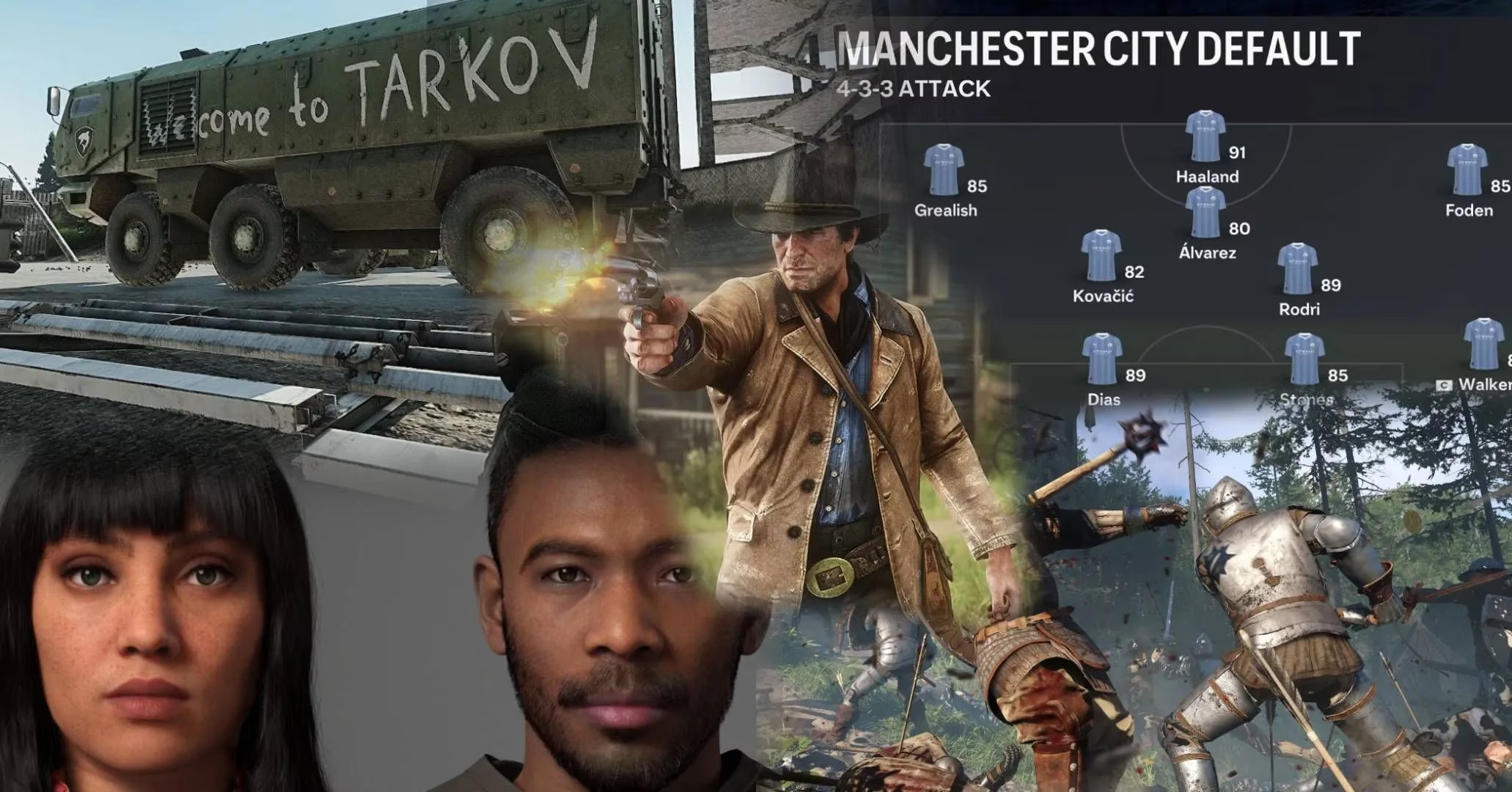
The digital frontier of gaming in 2026 has become a breathtakingly vivid mirror of reality itself. Fueled by the relentless march of technology, the once-clear line between the virtual and the tangible has been utterly vaporized, replaced by experiences so authentic they can make your heart pound with genuine adrenaline and your palms sweat with palpable tension. This seismic shift is no longer the exclusive domain of mega-budget studios; it's a revolution sweeping across the entire industry, from indie passion projects to the titans of development. The demand for photorealism, from the subtle sway of a blade of grass to the complex, momentum-based movement of a human body, has become the new gold standard, and the games leading this charge are nothing short of technological marvels.
🎯 The Photorealistic Vanguard: Bodycam and Beyond
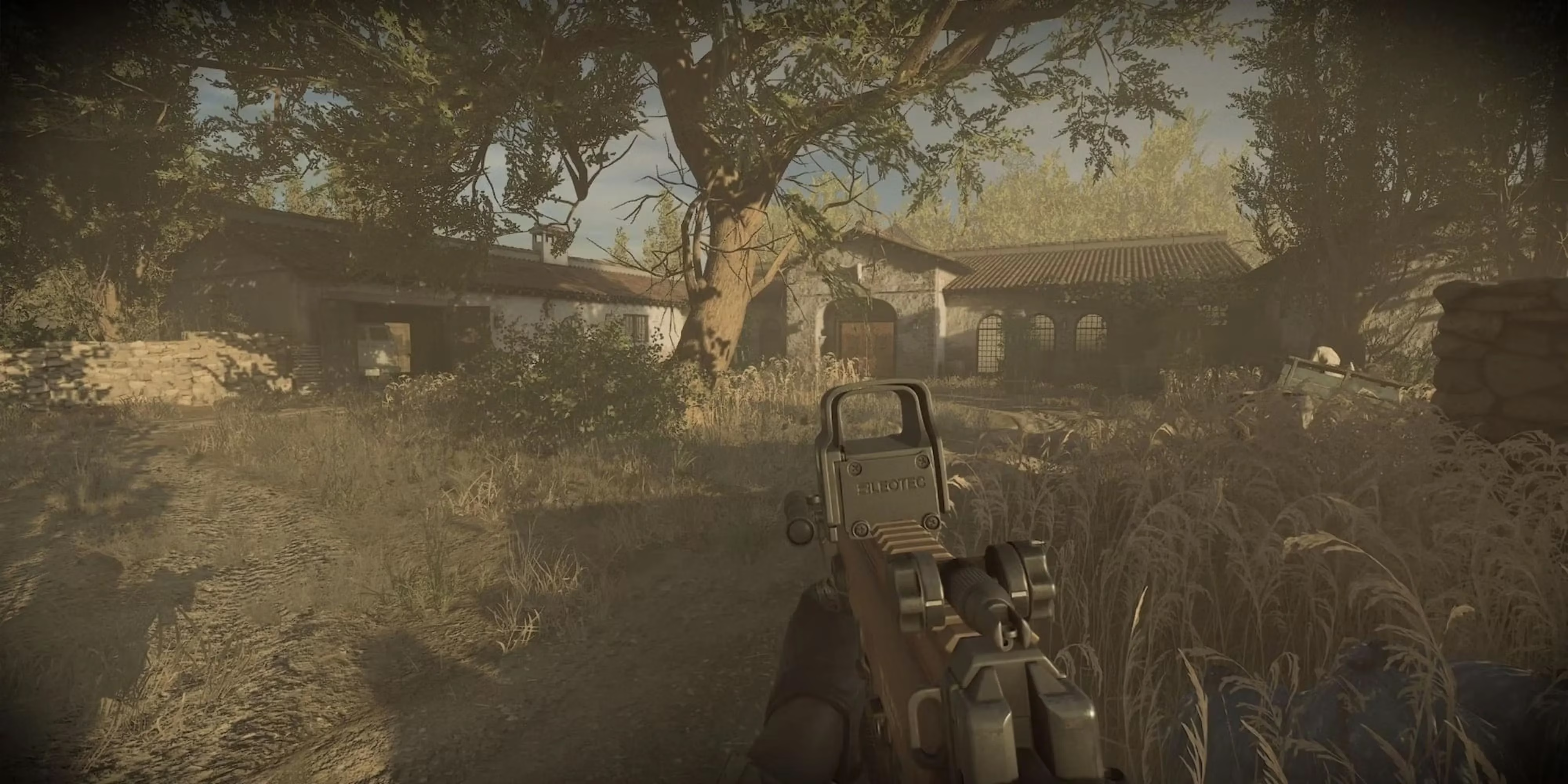
When Bodycam stormed onto the scene in 2024, it didn't just release a game; it unleashed a visual and auditory spectacle. Its Unreal Engine 5-powered vistas were so unnervingly lifelike that players were torn between awe and a creeping sense of dread, often comparing its firefights to scenes from a high-budget horror film. The game's genius lies in its commitment to human momentum over gamified physics. Every action—aiming, strafing, peeking around a corner—carries a weight and agility that feels authentically human, not robotic. This philosophy extends to its spine-tingling sound design and dynamic lighting, which doesn't just illuminate a scene but actively sculpts the atmosphere of terror and tension. It set a benchmark, proving that affordable hardware could now deliver experiences once reserved for science fiction.
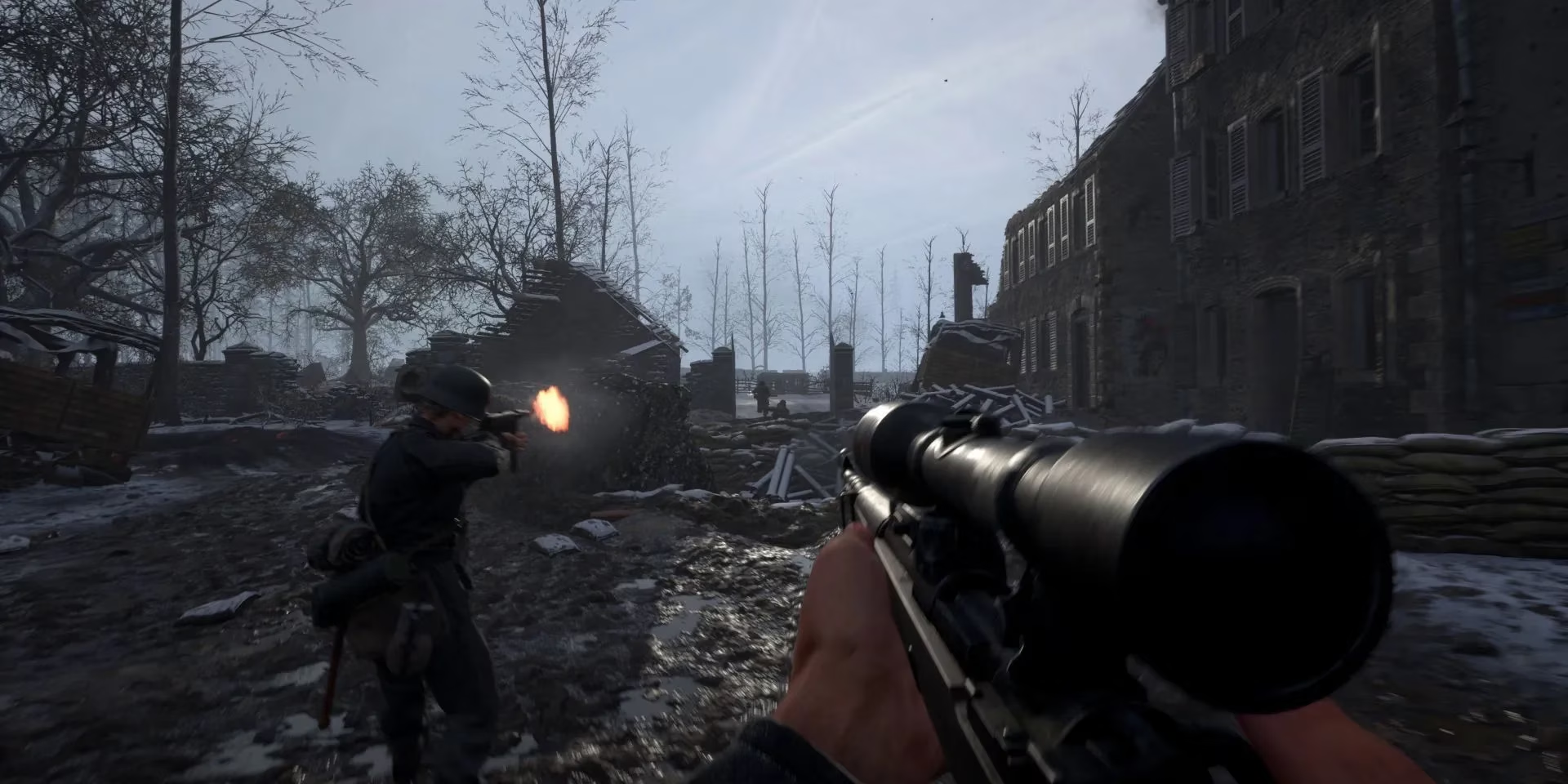
Not to be outdone, Hell Let Loose continues to be a bastion of brutal, large-scale authenticity. Its 50 vs. 50 battles are less about individual heroics and more about the terrifying, chaotic symphony of organized warfare. The game's minimalist UI forces players to rely on their wits and, most critically, their voice. Communication isn't just encouraged; it's the absolute lifeblood of victory. The command structure, with dedicated leadership and squad voice channels, creates an immersive chain of command that few other games dare to emulate. Its steep learning curve is a badge of honor, a gauntlet thrown down to those seeking a truly immersive and team-driven military simulation.
⚔️ Masters of Mechanics: Combat, Survival, and Simulation
While graphics stun the eyes, it's the underlying mechanics that truly sell the illusion of reality. Kingdom Come: Deliverance, despite its age, remains the undisputed king of realistic medieval combat. Its system is a masterclass in complexity:
| Combat Element | Realistic Implementation |
|---|---|
| Sword Physics | Blows account for weapon heft, swing momentum, and clashing armor layers. |
| Target Zones | Over 30 distinct hit areas on the body, each with different effects. |
| Strategy | Mindless button-mashing is punished; players must read opponents and exploit openings. |
This isn't fantasy swordplay; it's a desperate, calculated dance where a single misplaced strike can be your last.
In the realm of survival, The Long Dark offers a different kind of realism—one of quiet, desperate endurance. Its stylized visuals belie a brutally authentic simulation of survival against the elements. Players don't battle monsters; they battle hypothermia, starvation, and their own dwindling stamina. Every decision, from how long to maintain a fire to which path to take during a blizzard, carries permanent weight, especially in its unforgiving Permadeath Survival mode. It's a game that makes you feel the cold seeping into your bones and the gnawing emptiness of hunger.

For tactical purists, Ready or Not provides a nerve-wracking dose of law enforcement realism. As a SWAT team member, the emphasis is on de-escalation and apprehension, turning each room clearance into a high-stakes puzzle. The game's environments are dripping with atmospheric detail, and its fluid, weighty movement sells the feeling of being laden with gear. The ever-present risk of a non-lethal round still proving fatal adds a layer of tense morality to every engagement.
🚗 The Need for Speed (and Accuracy): Racing & Sports Sims
The pursuit of realism finds a natural home in simulation, and nowhere is this more evident than in racing. BeamNG.drive started as a physics tech demo and evolved into a glorious celebration of vehicular destruction and handling. Its soft-body physics engine is so advanced it's used for professional research (BeamNG.tech). For players, this translates into a sandbox where crashes are terrifyingly realistic spectacles and vehicle handling feels uniquely tangible.
Meanwhile, rFactor 2 remains the serious sim-racer's choice. Its legacy is its credibility; its isiMotor2 engine powers the rFpro software used by real-world F1 and NASCAR teams for simulation. This pedigree means every aspect—from tire wear that demands strategic pit management to AI that races with purpose—is designed to mimic the authentic motorsport experience as closely as possible.

Even the world of sports games has embraced ultra-realism. EA Sports FC 24 offers a masterclass in customization for the hardcore fan. Its extensive slider systems allow players to fine-tune a staggering array of gameplay variables:
-
Player/CPU Sliders: Adjust shot error, pass speed, injury frequency, and positioning.
-
Difficulty Tuning: Mitigate the sometimes-absurd AI behavior on higher settings by tweaking opponent capabilities.
-
Career Mode Depth: Create a uniquely challenging and personalized football management experience.
🧠 The Tools and The Titans
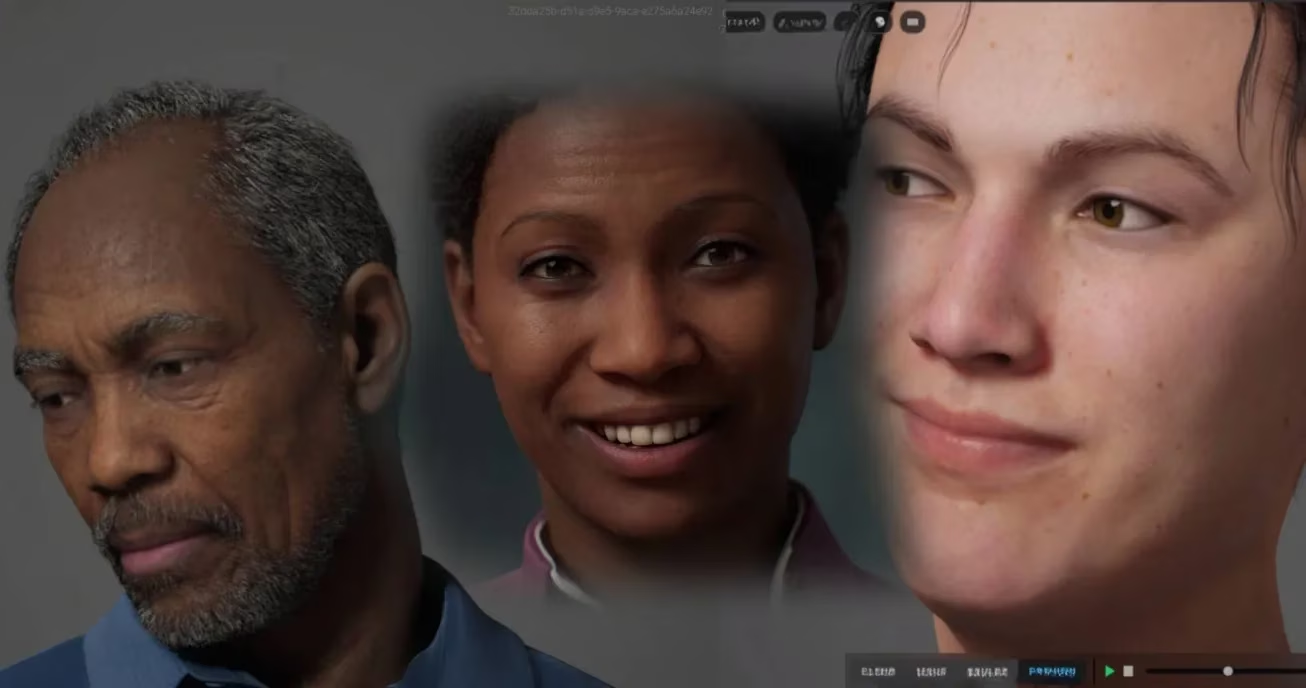
Powering this new era are not just games, but revolutionary creation tools. The MetaHuman Creator is a game-changer for developers and aspiring creators. This framework allows for the generation of stunningly realistic human models with fully functional rigging for animation, directly importable into Unreal Engine 5. With features like live facial capture via iPhone, the barrier to creating believable digital actors has never been lower.
And then there are the titans whose influence looms large. Escape from Tarkov continues to be the ultimate hardcore FPS crucible. Its realism is punishing and systemic:
-
A health system where limbs can be permanently "blacked out," requiring surgery.
-
A relentless focus on survival, resource management, and brutal PvPvE encounters.
-
A complete absence of hand-holding, creating an atmosphere of genuine tension and consequence.
Finally, Red Dead Redemption 2 stands as a timeless monument to holistic realism. Even years after its release, its living, breathing world is peerless. The realism isn't just skin-deep; it's woven into the fabric of gameplay and world-building. Animals behave with believable patterns, NPCs remember your actions, and the environment reacts to you in a thousand subtle ways—from the way your horse shies in a storm to the intricate ecosystem interactions. It remains the high-water mark for creating a virtual world that feels truly, profoundly alive.

In 2026, ultra-realism in gaming is no longer a niche novelty; it's the exhilarating new normal. These titles represent the vanguard of an industry committed to dissolving the barrier between player and experience, offering worlds that don't just look real, but feel real in every gunshot, every gear shift, and every desperate struggle for survival. The future is here, and it is breathtakingly authentic. 🎮✨