
The cold metal of the ventilation shaft pressed against his back as a lone PMC listened to the distant crackle of an AK rattle through the Ultra Mall. The year was 2026, and Escape from Tarkov had long since matured from its early open beta days into a brutal ballet of survival—yet one constant remained: the gnawing need for rare industrial materials. Tonight, his hideout demanded two cans of thermite to finally erect a Level 3 Workbench, a gateway to crafting high-tier ammunition that would let him punch through armor like a hot awl through wax.
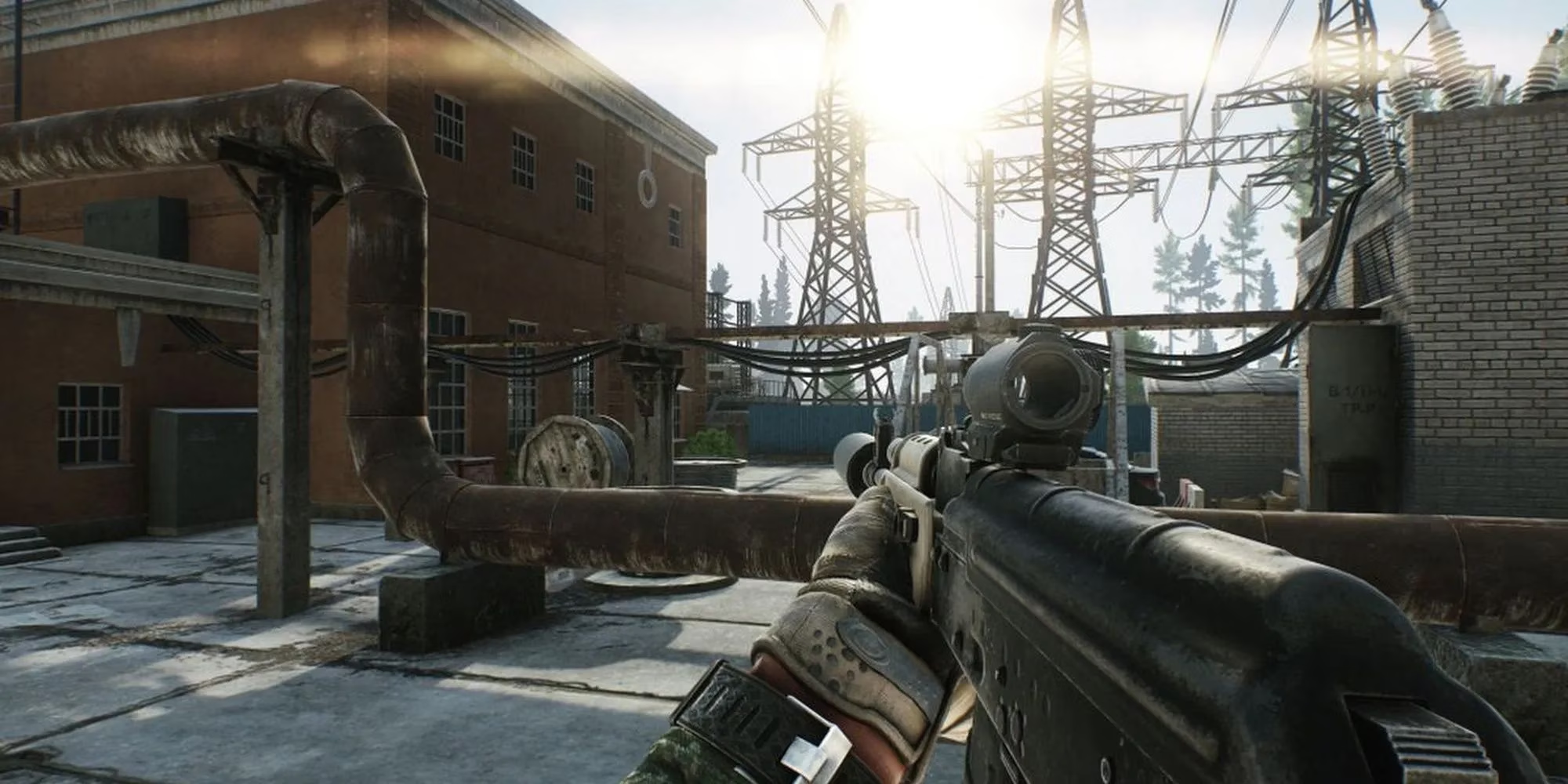
Thermite in Tarkov was no mere crafting ingredient; it was the philosopher’s stone of low-tier players, as elusive as a whisper in a hurricane. Unlike bolts or screw nuts that littered every shelf, a can of thermite seemed to have been scattered by a capricious wind, hiding in places that made one feel less like an operator and more like an archaeologist probing the ruins of a fallen world. The operator checked his map—Interchange—and began his descent into the cavernous mall, the fluorescent flicker of broken signs casting his shadow like a fractured marionette.
The Concrete Labyrinth of Interchange
The Ultra Mall stood as a skeletal cathedral of consumerism, its three anchor stores forming a maze of opportunity and danger. Idea lay on the north end, Goshan on the east, and between them the maintenance backrooms slept in perpetual darkness. Our scavenger crept into the supply corridor behind Idea, the air thick with the metallic scent of old machinery. There, among scattered toolkits and empty fuel canisters, he found his first miracle—a can of thermite, its crimson label grinning like a hearth in a blizzard. The backrooms behind Goshan yielded only a half-eaten crackers box, but the memory of that first success was a coal that warmed his resolve.
He moved southwest toward a cluster of shipping containers that jutted from the concrete like rusty puzzle pieces. A reach stacker loomed ahead, its hydraulic arm frozen in a final salute. On the steps leading up to the operator’s cab, the faint glimmer of another thermite can caught his torchlight—nestled there as if waiting for a hand steady enough to claim it. Nearby, inside Brutal, the second store on the right from the main entrance, the back shelves held a third potential spawn. The can sat behind a row of dusty mannequins, as incongruous as a pearl in a pigsty.
But the most nerve-racking find lay behind the mall itself. The Hole in Fence extraction point demanded a sacrifice: drop your backpack to slip through. On the barrels near that tear in the wire, thermite occasionally materialized, almost as if the game wanted to tempt deserters with one final gift. He did not need to extract yet, but the sight of that barrel’s glint was a quiet promise.
Shoreline’s Warehouses and Lighthouse’s Coastal Ruins
When Interchange grew too quiet—a silence that spelled imminent betrayal—the operator shifted his hunt to the Shoreline map. The warehouses and storage buildings strewn across the northern sector sat like a herd of slumbering iron beasts. The storage building just east of Warehouse 4 became his new vigil. Inside, a Technical Supply crate yawned open, its five-by-five wooden frame stained with rain and neglect. The crate’s top right sticker, a faded barcode, was a lighthouse for scavengers. He pried the lid and found not just electronic waste but the cool, cylindrical weight of a thermite can, rolling forward as if eager to escape the dark.
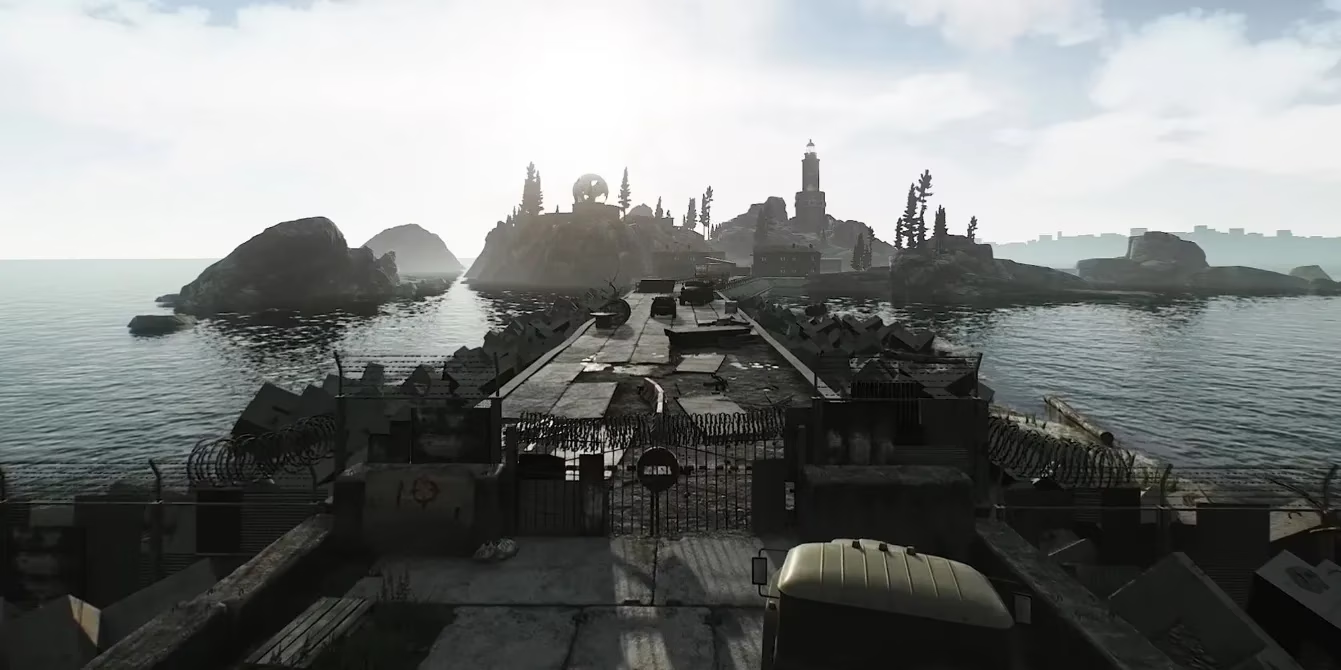
Feeling bold, he took his search to Lighthouse, where the sea breeze cut through the ruins. The map’s southeast edge held the Southern Road extraction, and beside an abandoned truck he discovered that thermite could spawn as if tossed by a fleeing driver. Further north, before the western bridge to the water treatment plant, a construction site rose in a tangle of rebars. There, atop crates, two more cans sat—one had already been looted, but the other remained, half-hidden by a tarp. A van towing a car off the construction road also whispered a secret: between the two vehicles, an item spawn point glittered with possibilities. He found nothing there but a bulb, yet the lesson stuck like a burr to his memory—thermite loved liminal spaces, the places where two objects nearly touched.
The Loot Caches That Speak in Riddles
By 2026, seasoned operators had learned that memorizing exact locations was a fool’s errand, for the Tarkov economy shifted like sand dunes. The real skill was reading the land’s own runes: certain container types hoarded thermite with a miser’s constancy.
-
Technical Supply Crates: These five-by-five wooden monoliths, found on every map, bore a sticker on the top right like a postage stamp from a forgotten nation. Among coiled wires and capacitors, thermite lurked.
-
Buried Barrel Caches: Only their grayish-blue rims broke the surface, like a crocodile’s nostrils in a swamp. Interacting with the top was enough—no shovel required. They were scatterbrained hoarders, holding everything from matches to military-grade fuel, and occasionally a hissing can of thermite.
-
Ground Caches: Hidden beneath leaves and branches, these crates were nature’s sleight of hand. To spot one was to see the forest floor blink.
-
Dead Scavs: Already corpses when the raid began, these poor souls were a macabre lottery. Sometimes they clutched nothing but lint; other times, a can of thermite lay next to their final, grasping fingers, as if they had died trying to barter their way to safety.
Our operator eventually returned to his hideout with two charmed cans of thermite, his heart a drum of quiet triumph. The workbench took shape under the gloom of a bare bulb, its surfaces ready to press the finest M995 rounds. He knew the hunt would evolve—new maps and patches would reshuffle the loot tables like a monstrous deck of cards—but the ritual of seeking thermite had become a story etched into his bones. In Tarkov, where every victory was borrowed and every death a lesson, the can of thermite was more than resource; it was a love letter from the chaos, brief and blazing.