
The integration of crafting mechanics into video games has evolved far beyond simple resource gathering and item creation, becoming a cornerstone of player-driven progression and creative expression. As of 2026, these systems continue to define genres, particularly RPGs and survival games, where the satisfaction of combining disparate elements to achieve greater utility remains a powerful motivator. While the foundational concept of gathering materials to build tools—popularized by games like Minecraft—persists, numerous titles have pushed the boundaries, implementing crafting in ways that are deeply intertwined with their core identity and gameplay loops.
10. Spell Crafting: Arcane Synthesis
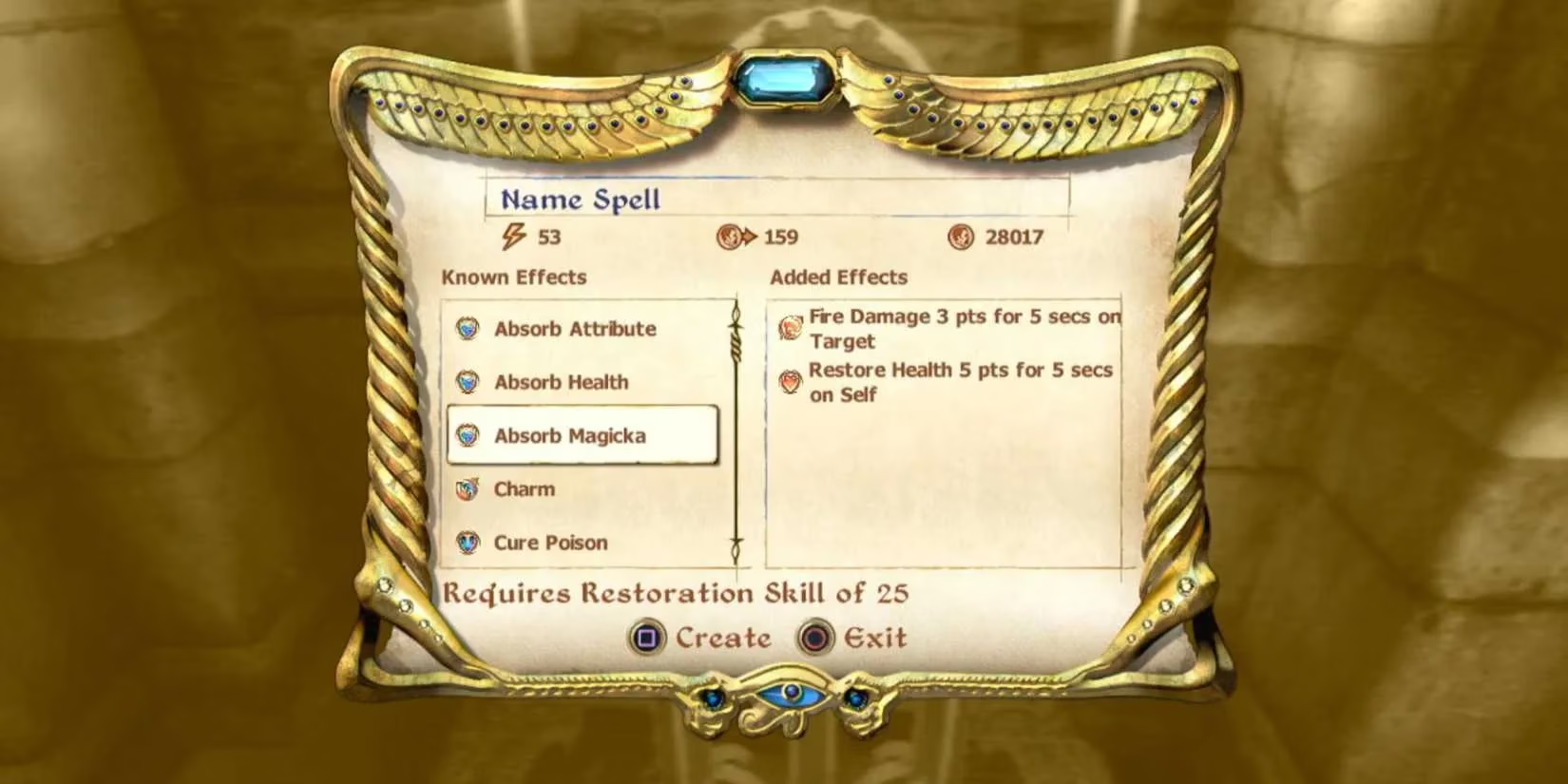
In the realm of fantasy RPGs, The Elder Scrolls IV: Oblivion offered a magical form of crafting that has yet to be fully replicated. This system allowed players to become true architects of arcane power. By visiting special altars, mages could deconstruct learned spells and recombine their fundamental effects into entirely new incantations. Imagine weaving a spell that cloaks the caster in frost resistance while simultaneously projecting a wave of searing flames—a perfect tool for turning the tables on a Frost Atronach. This mechanic introduced a layer of strategic depth and player agency that encouraged experimentation, a feature notably absent in its successor, Skyrim. The loss of this system left a void for players who enjoyed tailoring magic to their precise tactical needs.
9. Combo Weapons: Improvised Mayhem
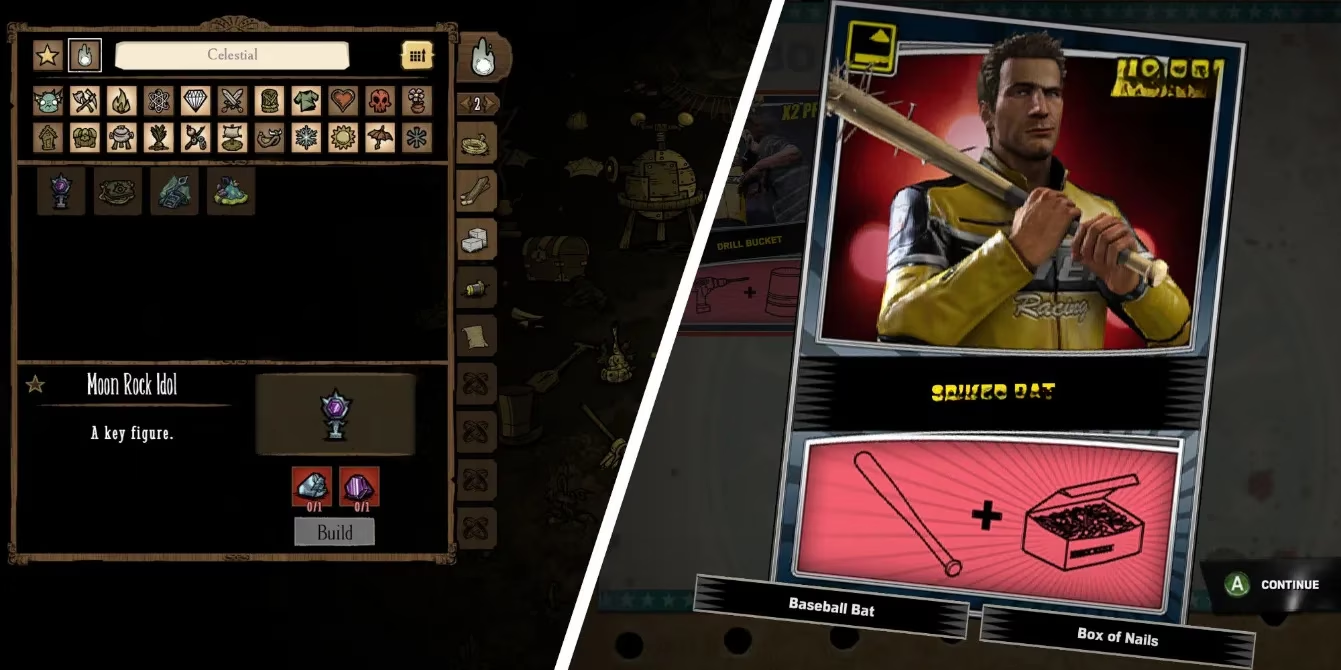
Turning everyday items into instruments of zombie destruction became an art form in Dead Rising 2. The game’s Combo Weapon system encouraged players to view their environment not just as a backdrop, but as a giant toolbox. The process was intuitive yet wildly creative: combine a baseball bat with a box of nails to create a brutally effective spiked club. The true genius, however, lay in the more absurd combinations. Who would think to merge a bingo ball cage with a car battery? The result was the Tesla Ball, a rolling cage of electrocution that could clear entire hordes with a satisfying crackle. This system celebrated chaotic creativity, rewarding players for thinking outside the box—literally—and transformed mundane items into legendary weapons of mass zombie disposal. 😄
8. Ship Building: Crafting Your Cosmic Home
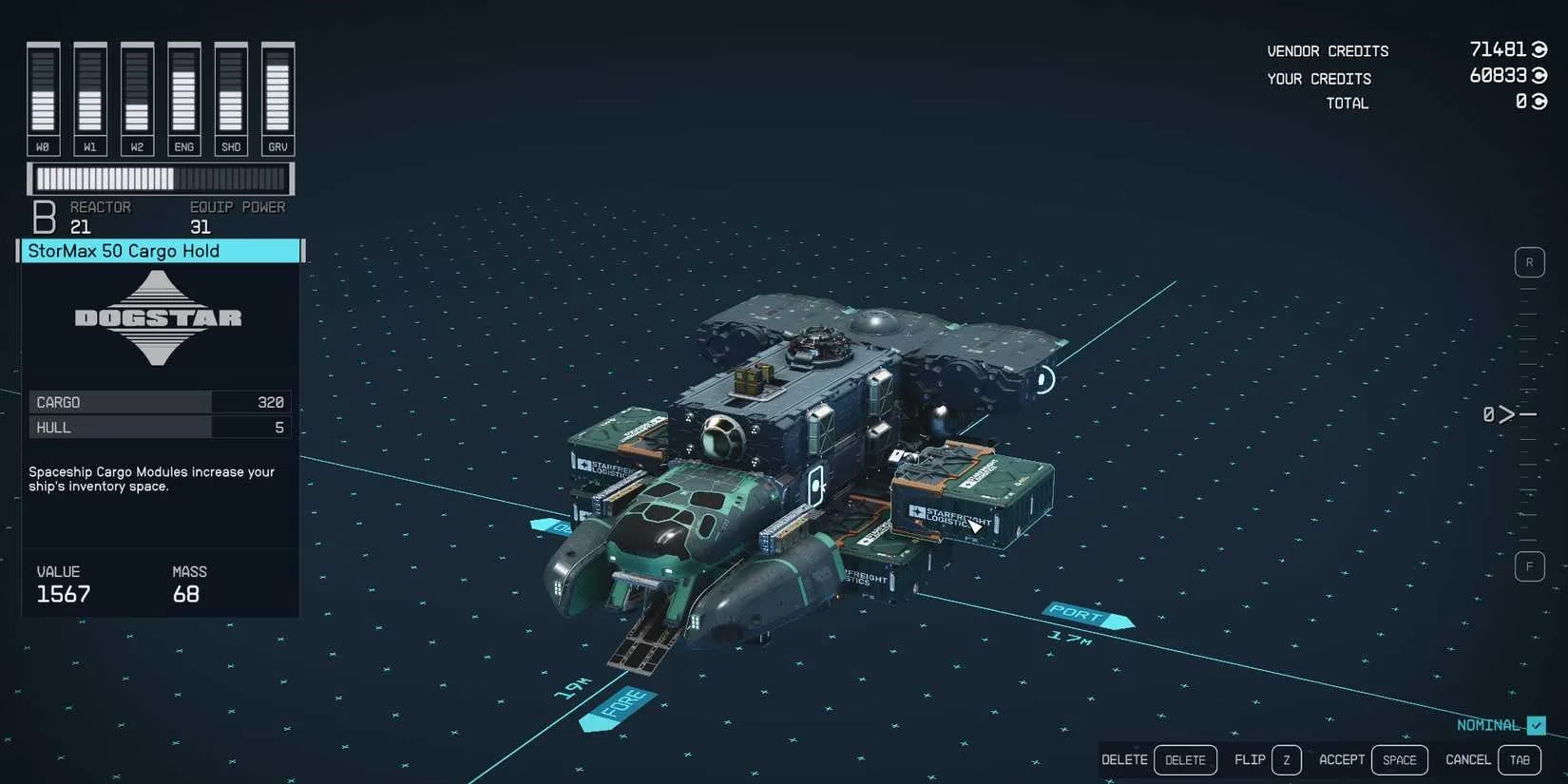
Bethesda's space epic, Starfield, elevated crafting from personal gear to personal spacecraft. The shipbuilding system is a masterclass in player-owned progression, functioning as a detailed 3D editor where every hull plate, engine, and hab module matters. Players aren't just assembling a vehicle; they are constructing a mobile base that directly impacts every facet of spacefaring life. The interior layout determines crew quarters and storage, while external components dictate combat prowess, jump range, and cargo capacity. The freedom is staggering: you can build a sleek, efficient freighter, a menacing warship reminiscent of classic sci-fi, or even a whimsical, shape-based tribute to a favorite character. This system makes the player’s ship a true extension of their identity in the cosmos.
7. Hunting to Craft: The Predator's Path
Far Cry 3 framed its crafting progression not around mining nodes or chopping trees, but around the dangerous and deliberate act of hunting. To expand your gear capacity—crafting a larger wallet, quiver, or loot pouch—you needed specific animal skins. This started simply with boars and tapirs but escalated dramatically. Progress meant tracking and defeating increasingly deadly predators: tigers lurking in the jungle, sharks patrolling the reefs, and ultimately, legendary "alpha" beasts with unique names like the Blood Komodo. This created a compelling gameplay loop separate from the main narrative, where crafting upgrades were earned through skill, patience, and courage, making each new inventory slot feel like a hard-won trophy.
6. Crafting With Friends: Automated Companionship
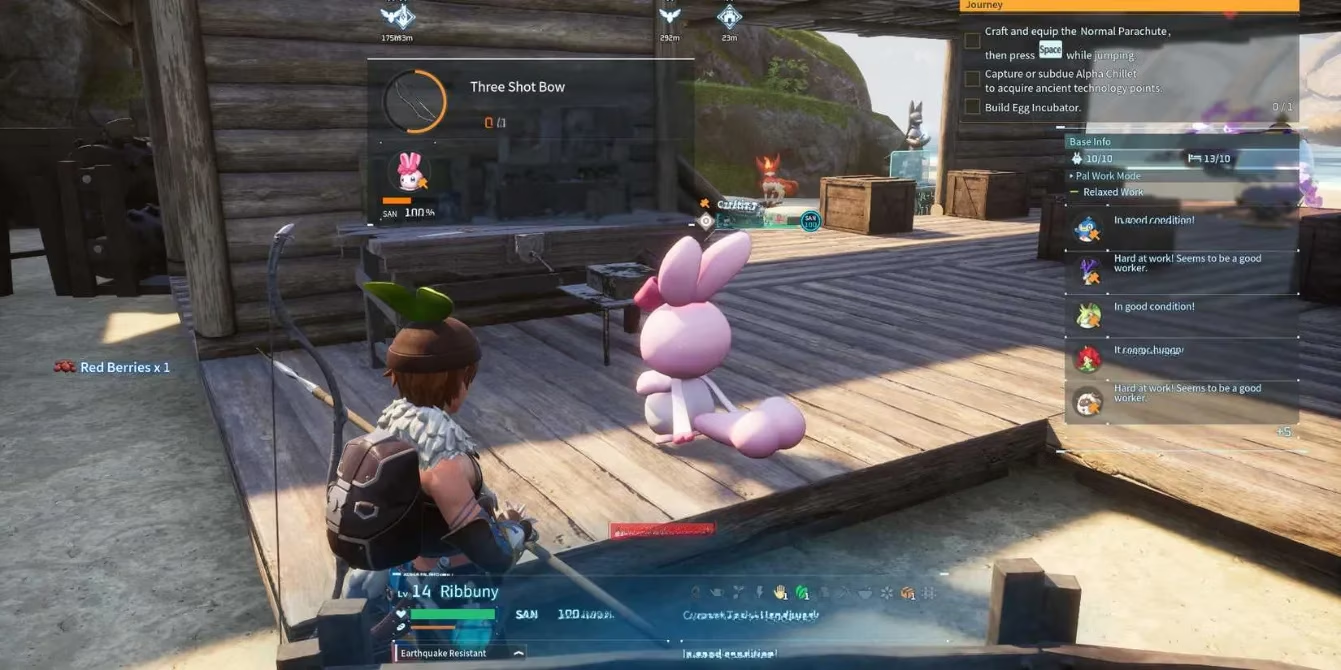
The breakout hit Palworld put a charming and efficient twist on survival crafting by making your captured creatures, the Pals, active participants in the process. Instead of the player manually performing every task, Pals can be assigned to workstations based on their innate abilities. Need medicine? Assign a Pal with the Medicine Production skill to the workbench. Need ore smelted? A fire-type Pal has you covered. This creates a dynamic base management system where the player can focus on exploration or combat while their Pals maintain production lines. Some Pals even craft items faster than the player can, incentivizing the collection and strategic deployment of a diverse workforce. It’s a system that seamlessly blends creature collection with industrial automation.
5. Crafting Filters: Contextual Creation
Don't Starve Together takes what seems like a standard survival crafting menu and injects it with layers of situational complexity. The recipes available to a player aren't static; they shift and change based on multiple, often cryptic, factors. Key variables include:
-
Character Choice: Webber, a boy living with a spider for a head, has access to a unique "Spider Care" tab for crafting spider eggs and related items.
-
Location: Venture into the deep, dangerous ruins, and the ancient Pseudoscience Station tab unlocks, offering powerful and eldritch recipes.
-
Environmental Proximity: Stand near a Celestial Orb, and the Celestial tab appears, allowing crafting of otherworldly items.
This design turns crafting into a puzzle and an exploration incentive. Players must discover not just how to craft, but where and as whom they can craft, adding immense depth to the already challenging survival experience.
4. Buildables: The Scavenger Hunt
Call of Duty: Black Ops II's Zombies mode introduced "Buildables," a crafting system that functioned more like a structured scavenger hunt than a freeform creation suite. Powerful tools like the Zombie Shield or the Turbine weren't crafted from generic resources. Instead, their specific component parts—a handle, a sheet of metal, a motor—were scattered in predetermined locations across the map. Players had to memorize these spawn points, often located in different locked zones that required points to open, and then bring all pieces to a central workbench. This created a compelling team dynamic ("I've got the lever, who has the grill?") and integrated crafting directly into the map control and point economy that defines CoD Zombies gameplay.
3. Scrap: Junk's Redemption Arc
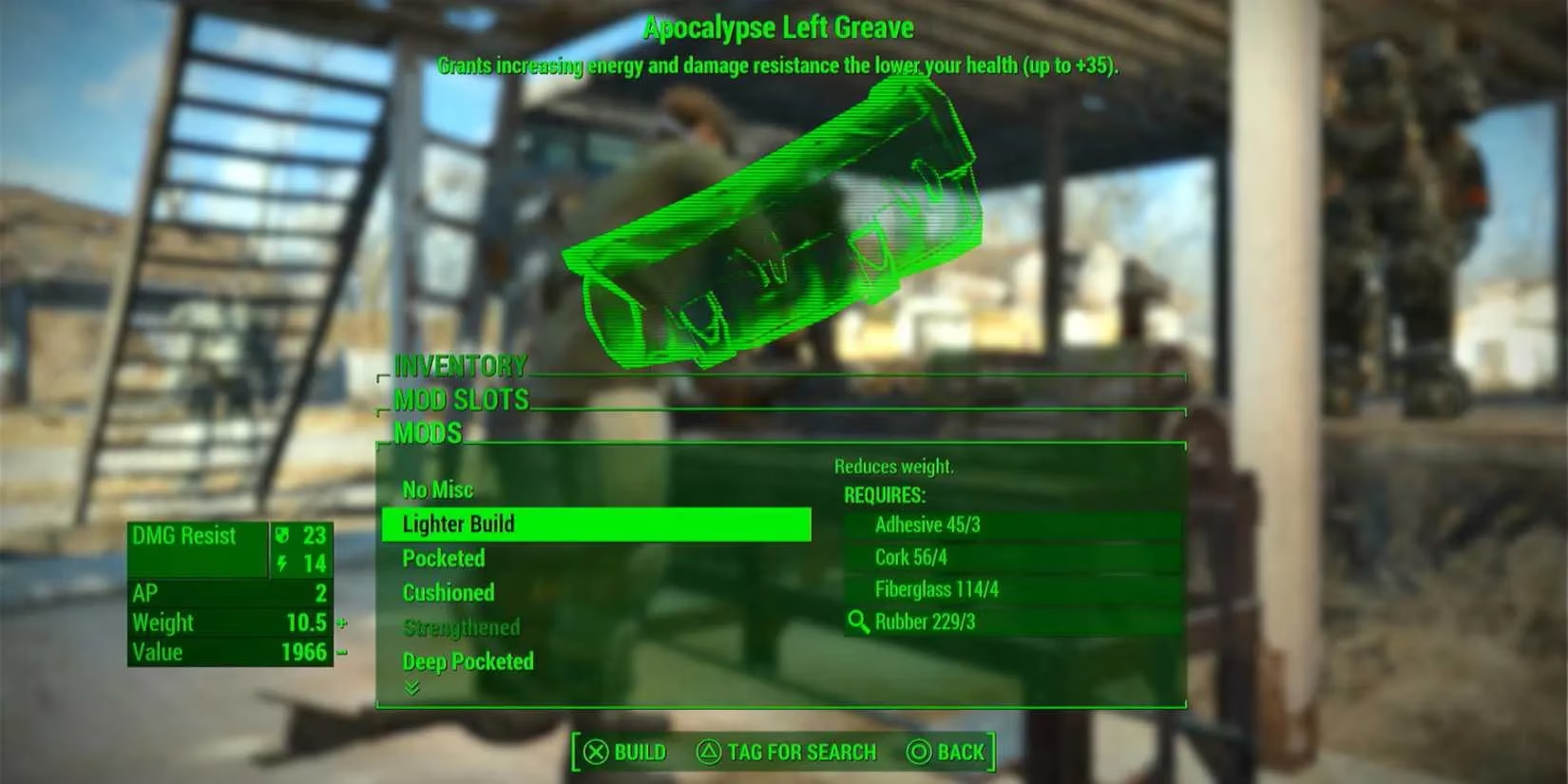
Fallout 4 performed a minor miracle: it made every piece of worthless junk in the post-apocalyptic world suddenly invaluable. Where previous games treated desk fans, toy cars, and hot plates as mere vendor trash, Fallout 4 assigned them intrinsic material value. Every item could be broken down into fundamental scrap components:
| Junk Item | Potential Scrap Resources |
|---|---|
| Desk Fan | Screws, Gears, Steel |
| Toy Car | Screws, Plastic, Steel |
| Nuka-Cola Bottle | Glass |
| Hot Plate | Ceramic, Copper, Steel |
This scrap was the lifeblood of the game’s two major crafting pillars: weapon/armor modification and settlement building. Want a reflex sight for your laser rifle? You'll need adhesive and circuitry, perhaps salvaged from a wonderglue and a broken alarm clock. This system transformed looting from a search for caps into a search for specific materials, making every ruined house a potential treasure trove.
2. An Abundance of Systems: Crafting as Life
Project Zomboid approaches crafting not as a supplemental activity, but as the very simulation of survival. The sheer volume and granularity of its crafting recipes are staggering. This isn't just about building barricades or weapons; it's about crafting the mundane reality of staying alive. Nearly every action beyond moving and swinging a weapon is tied to a crafting menu or recipe.
-
Boiling murky water to make it potable requires a heat source and a container.
-
Tearing clothing into bandages or thread is a crafting action.
-
Replacing the battery in a flashlight or car follows a specific recipe.
This design philosophy creates an immersive, grim realism. Survival depends on mastering a vast array of practical skills. Crafting a makeshift axe to break down a door is given the same mechanical weight as crafting a meal on a grill or unpacking a box of shotgun shells. It highlights the exhausting, detail-oriented struggle of a true apocalypse.
1. Weapon Modding: The Gunsmith's Playground
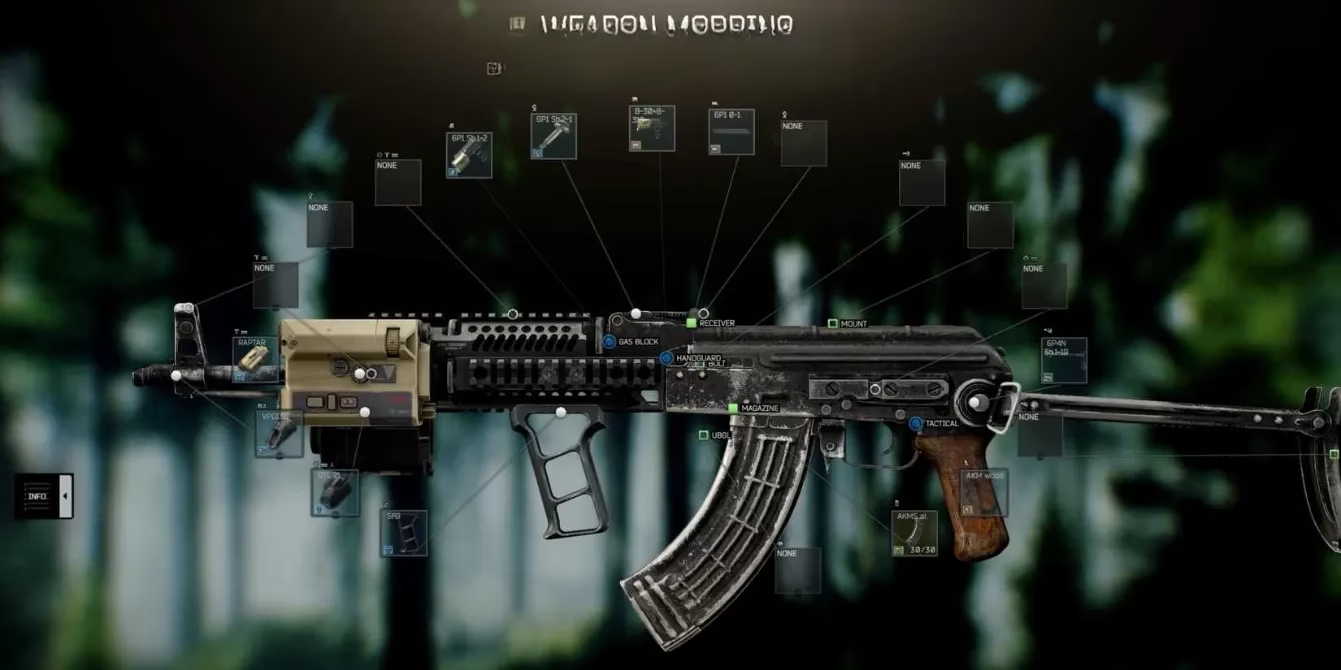
For sheer mechanical depth and customization, few systems rival the weapon modding in Escape from Tarkov. This hardcore tactical shooter treats firearms not as monolithic objects, but as complex assemblies of interchangeable, real-world parts. The level of detail is obsessive: players can swap out barrels, handguards, stocks, pistol grips, muzzle devices, optics, lasers, flashlights, and even internal components like gas blocks and charging handles. The game’s adherence to real-world weapon compatibility means builds must be physically plausible, but within those bounds, the creativity is boundless. You can create a hyper-modern, tacticool assault rifle bristling with accessories, or a cursed, minimalist abomination—like a vintage PPSh-41 submachine gun adorned with a modern red-dot sight and a foregrip. The system offers profound tactical choice, allowing players to fine-tune weapons for specific combat roles, maps, or personal preferences, making each firearm a deeply personal tool.
Conclusion: The Enduring Legacy of Creative Crafting
As these diverse examples illustrate, crafting in video games has matured into a versatile design tool. It is no longer a mere checklist of recipes but a foundational system that can drive exploration (Far Cry 3), define a game's identity (Project Zomboid), enable creative expression (Starfield), or add strategic depth (Escape from Tarkov). The most memorable systems are those that are deeply woven into the game's world and mechanics, making the act of creation feel meaningful, rewarding, and uniquely tied to the experience. From spellcrafting altars to post-apocalyptic junk piles, these innovative approaches continue to show that how players build and create can be just as engaging as what they ultimately destroy.